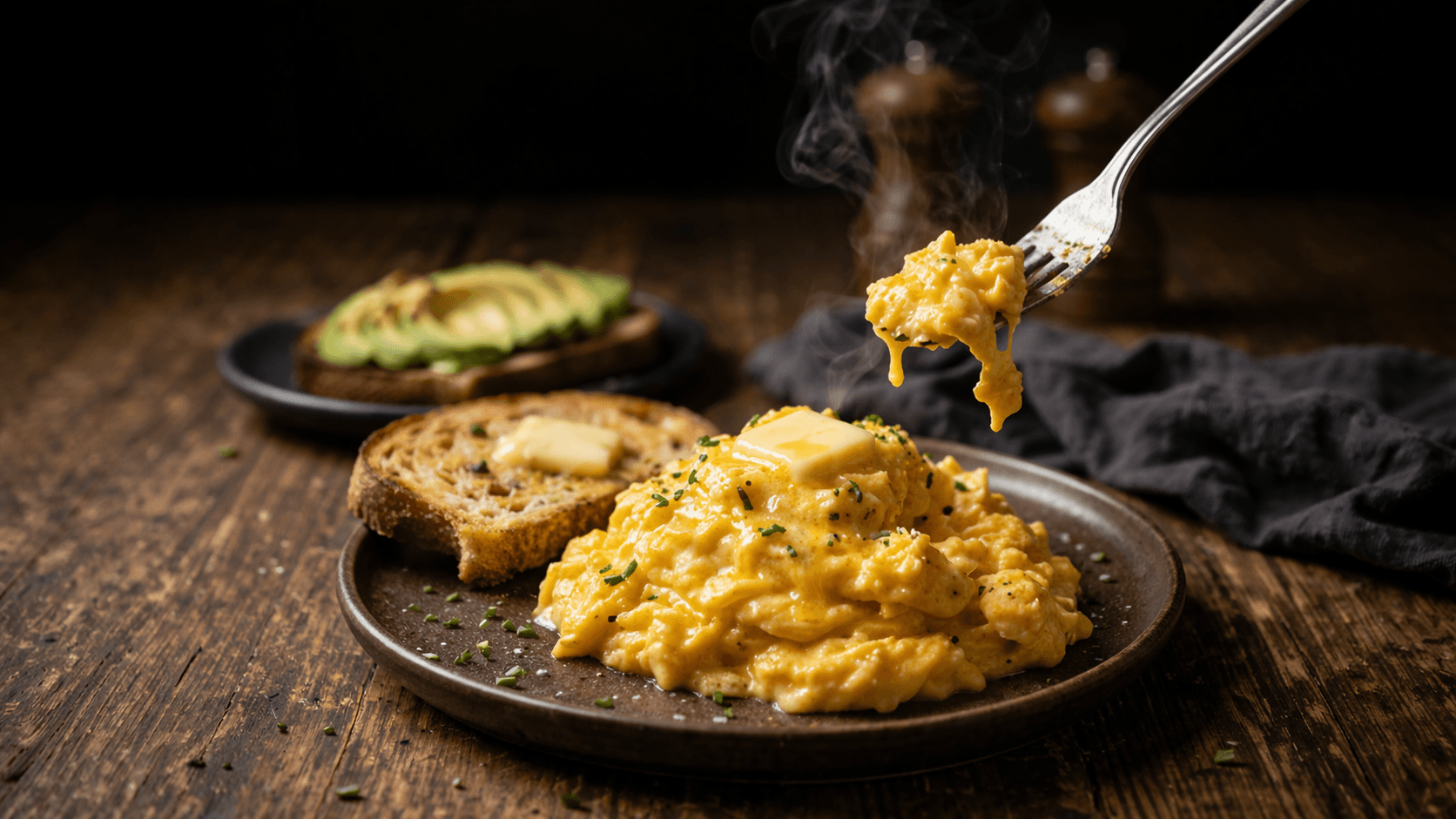
Stop settling for dry, rubbery breakfast eggs! If you’ve ever wondered how to make scrambled eggs fluffy and luxurious like a professional chef, you are in the right place. This Easy Scrambled Eggs Recipe is the ultimate guide for beginners and busy people who want a 5 minute scrambled eggs breakfast that looks like Food Art. By using a simple low and slow method, you can transform humble eggs into a restaurant style scrambled eggs masterpiece right in your own kitchen.

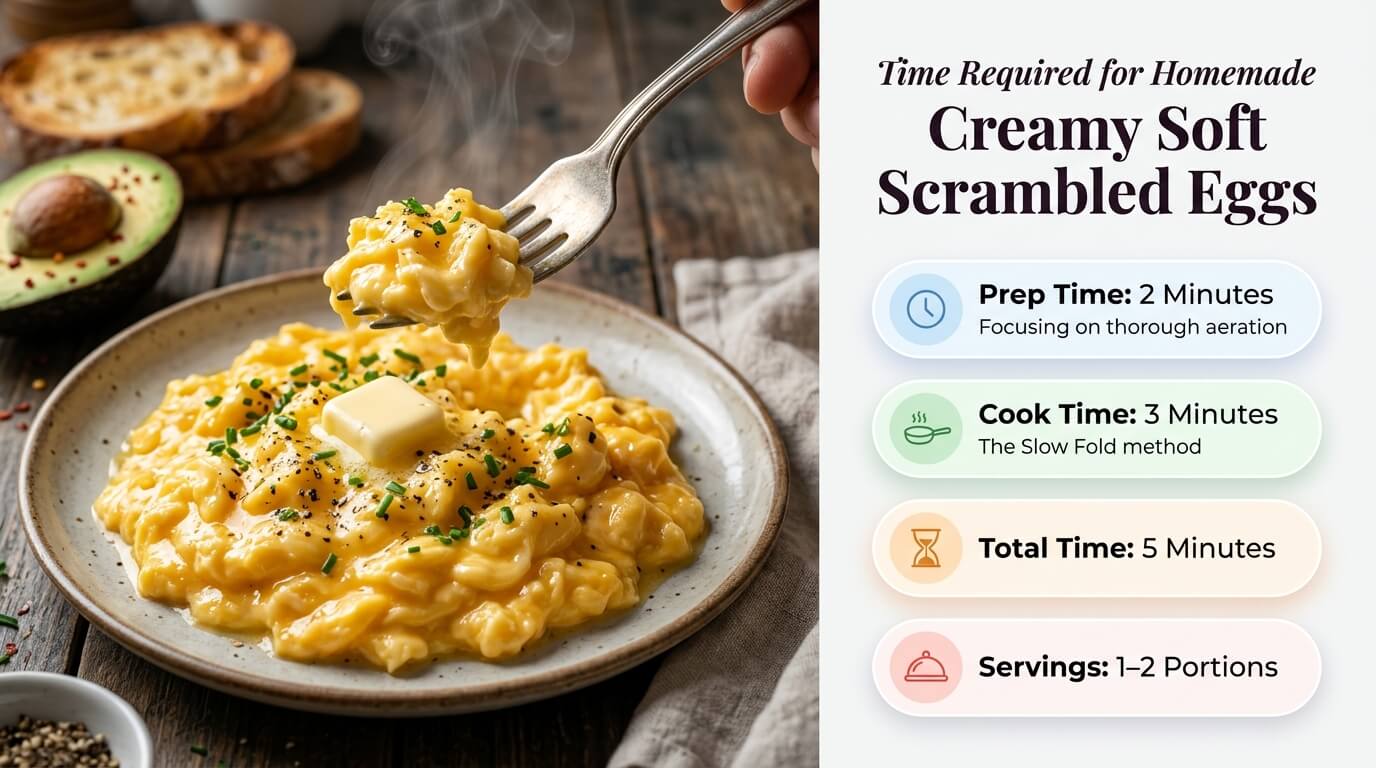
Time Required for Creamy Soft Scrambled Eggs
Ingredients for Easy Scrambled Eggs Recipe
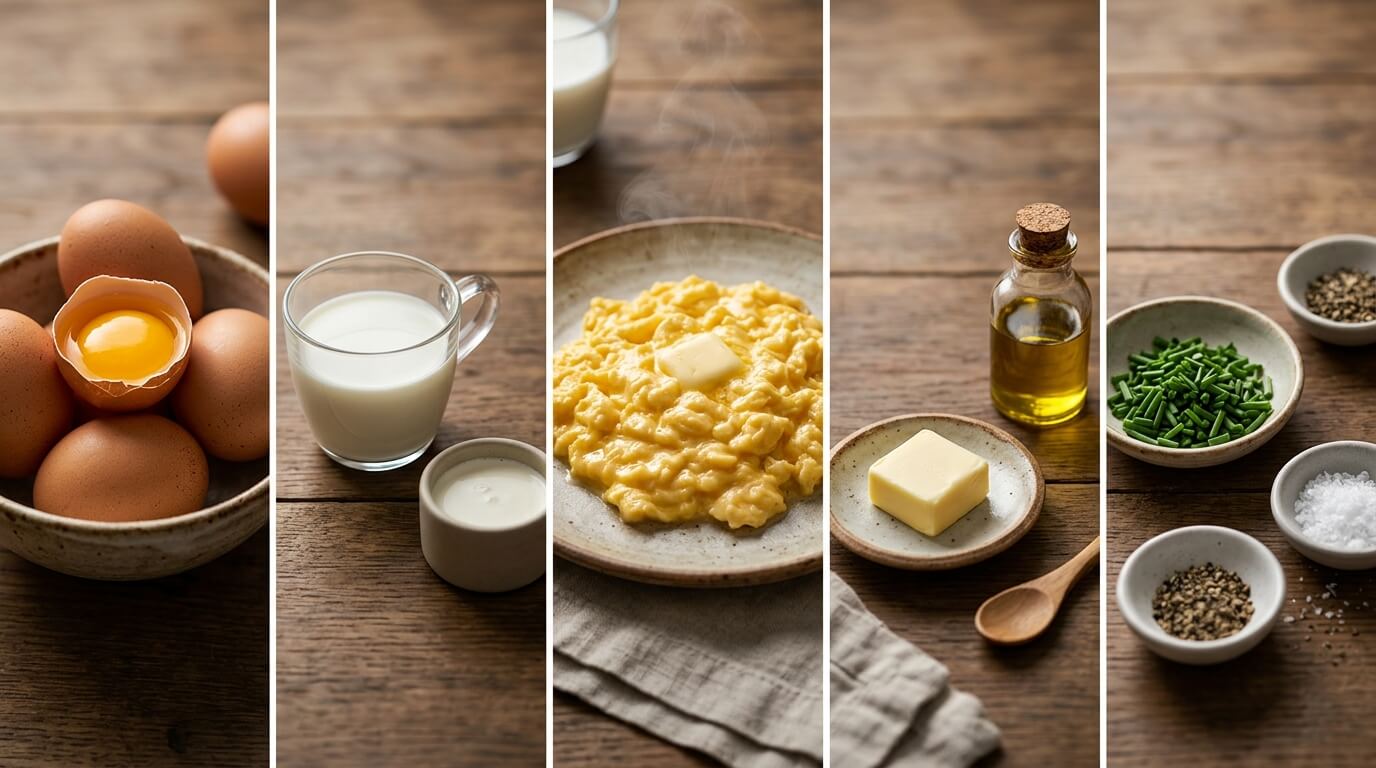
Large Eggs: 2/3 per person high-quality pastureraised eggs.
Liquid (The Fluff Factor): 1 tablespoon of whole milk, heavy cream, or water (for a no milk option).
Fat: 1 teaspoon of unsalted butter or olive oil for a healthy swap.
Seasoning: A pinch of fine sea salt and freshly cracked black pepper.
Garnish: Freshly chopped chives essential for that Food Art look.
Equipment Needed for Easy Scrambled Eggs Recipe
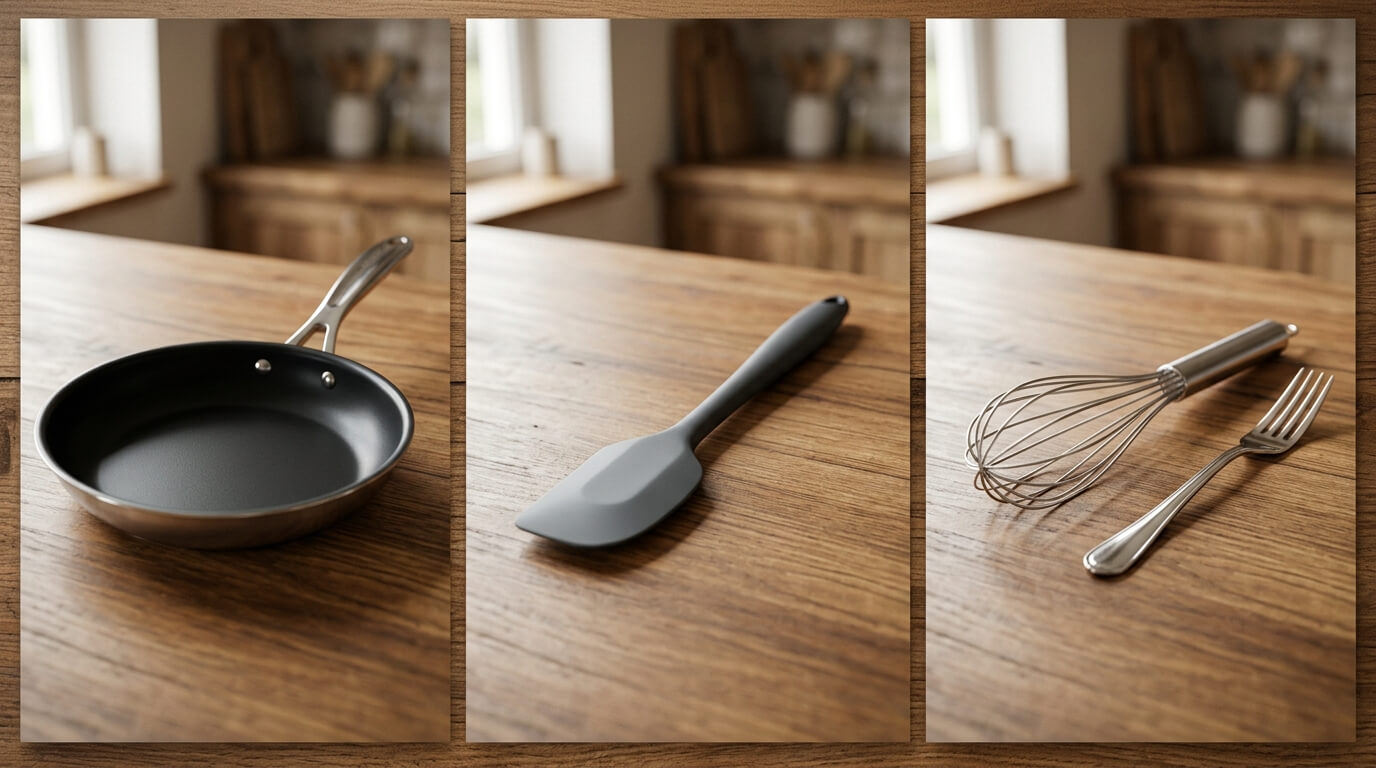
Non Stick Skillet: A 8 inch or 10 inch pan is best to prevent sticking.
Silicone Spatula: This allows you to sweep the eggs without scratching the pan.
Whisk or Fork: To thoroughly combine the yolks and whites.
Step by Step Instructions
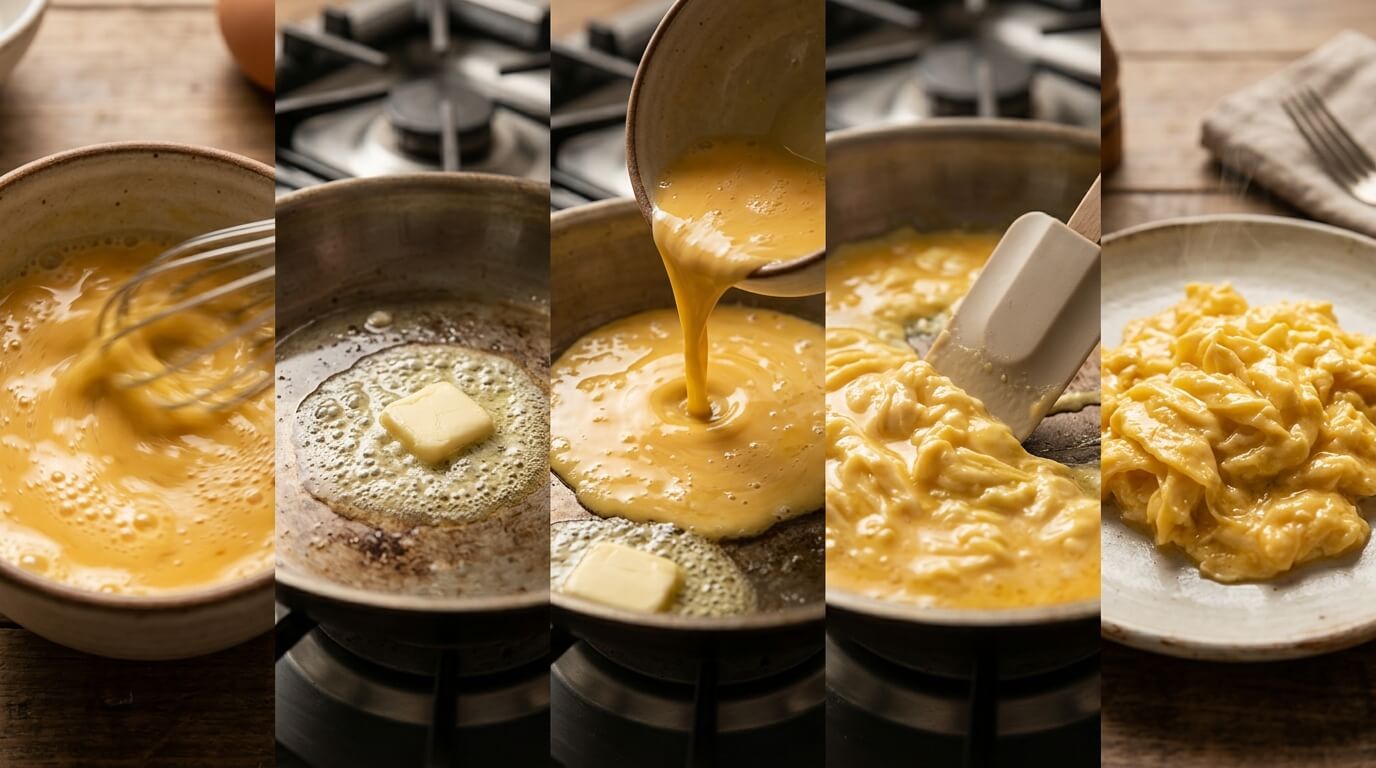
Step 1: The Aeration Whisk
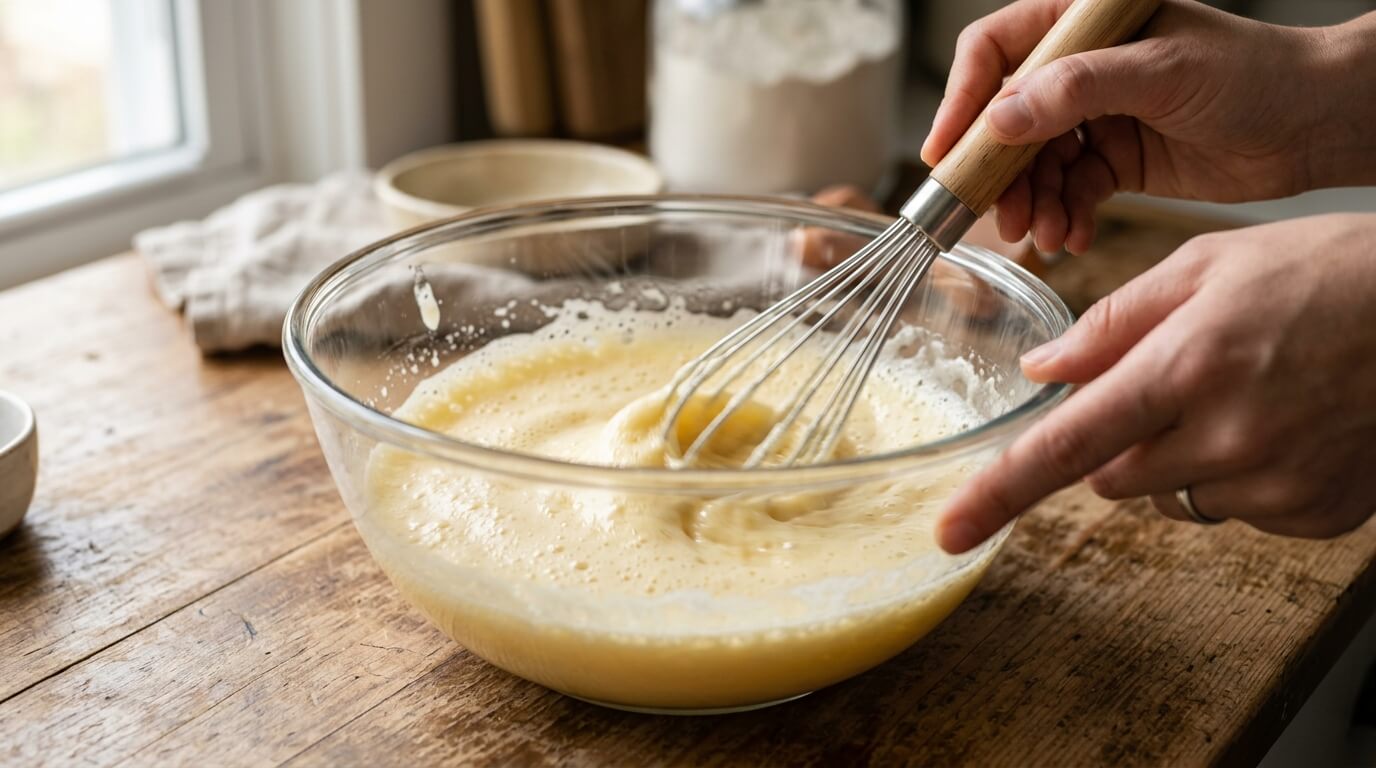
Crack your eggs into a bowl and add your milk or cream. Whisk vigorously for 45/60 seconds. You are looking for a uniform pale yellow color with plenty of tiny bubbles on the surface. This air is what makes the scrambled eggs fluffy during the cooking.
Step 2: The Cold Start Melt
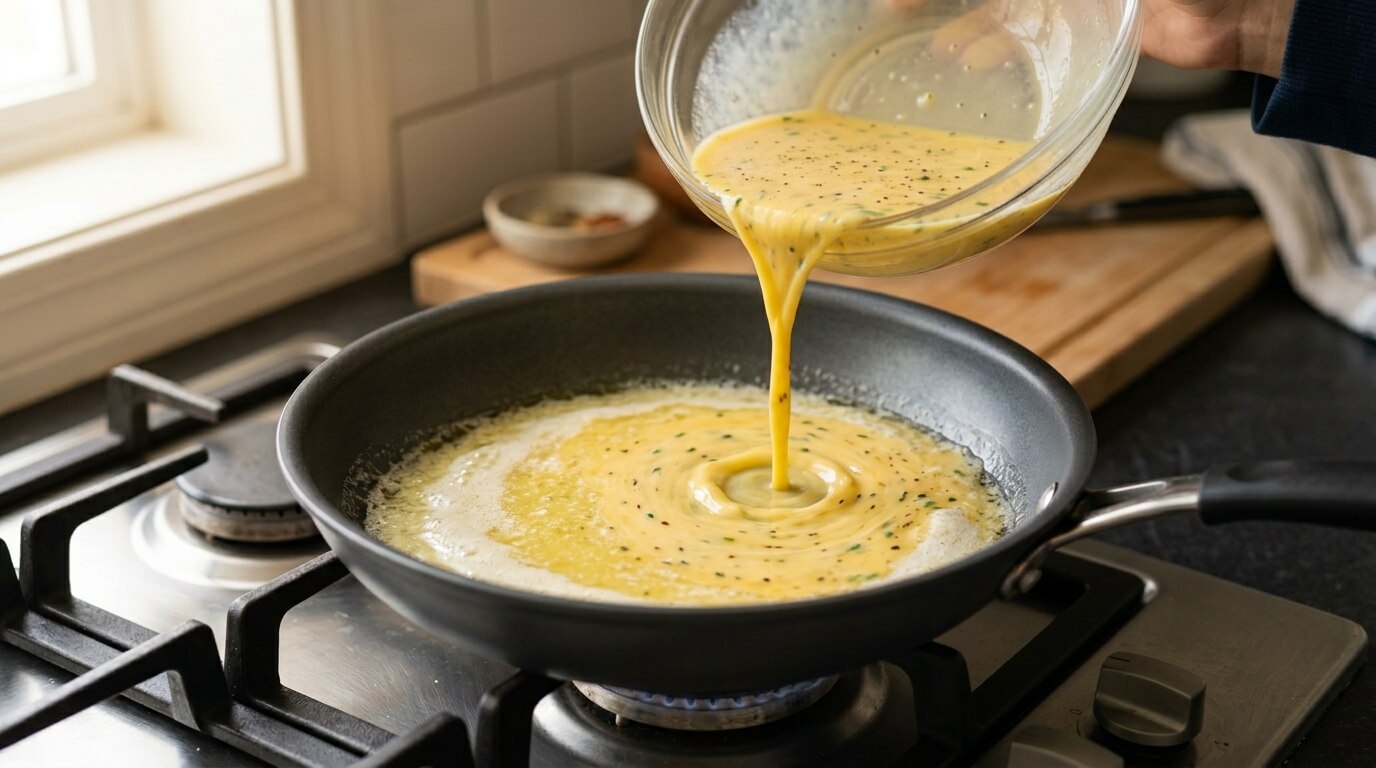
Place the butter in your skillet over medium low heat. Do not let it brown or sizzle too loudly. Once the butter is melted and foaming slightly, pour in your egg mixture.
Step 3: The Low and Slow Sweep
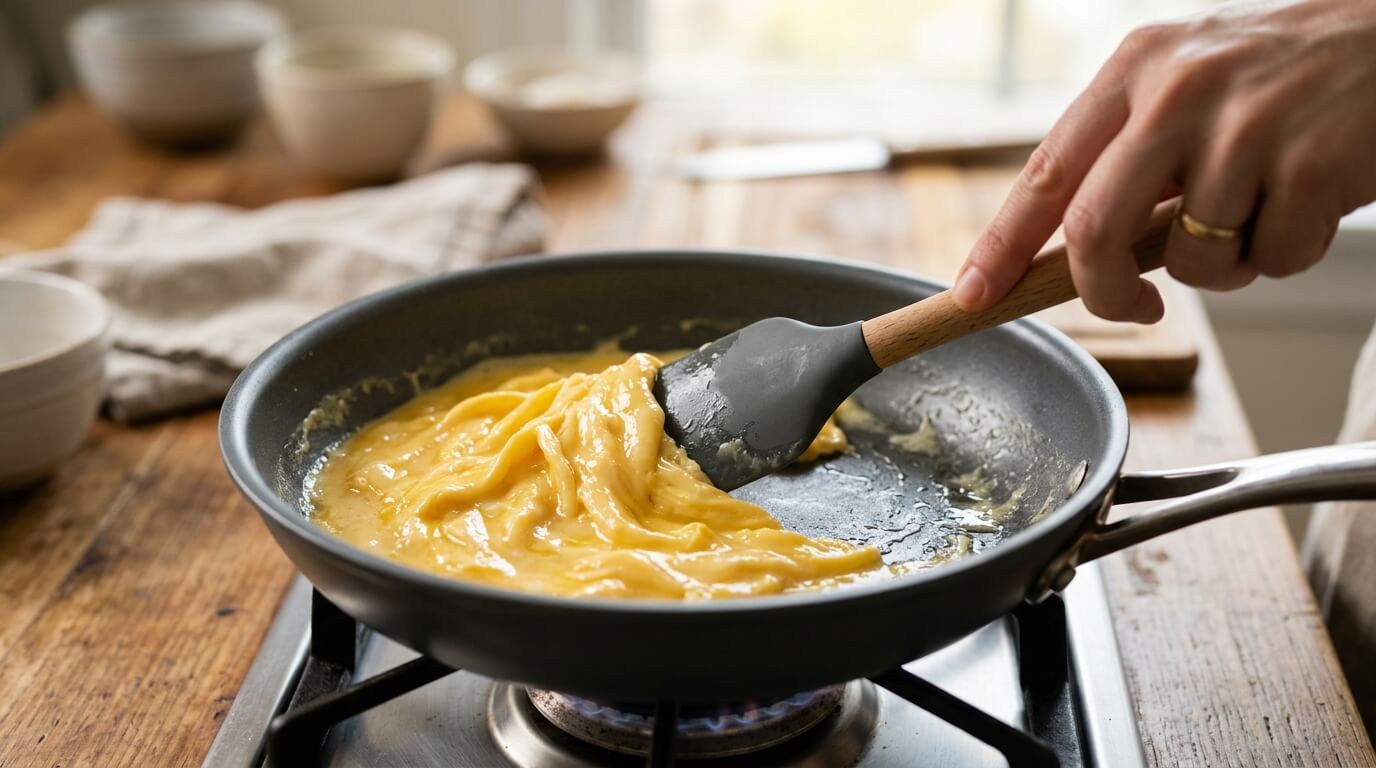
Let the eggs sit for about 20 seconds until the edges begin to set. Using your silicone spatula, gently sweep the eggs from the outer edge toward the center. This creates long, soft ribbons rather than small, dry crumbles.
Step 4: The Off Heat Finish
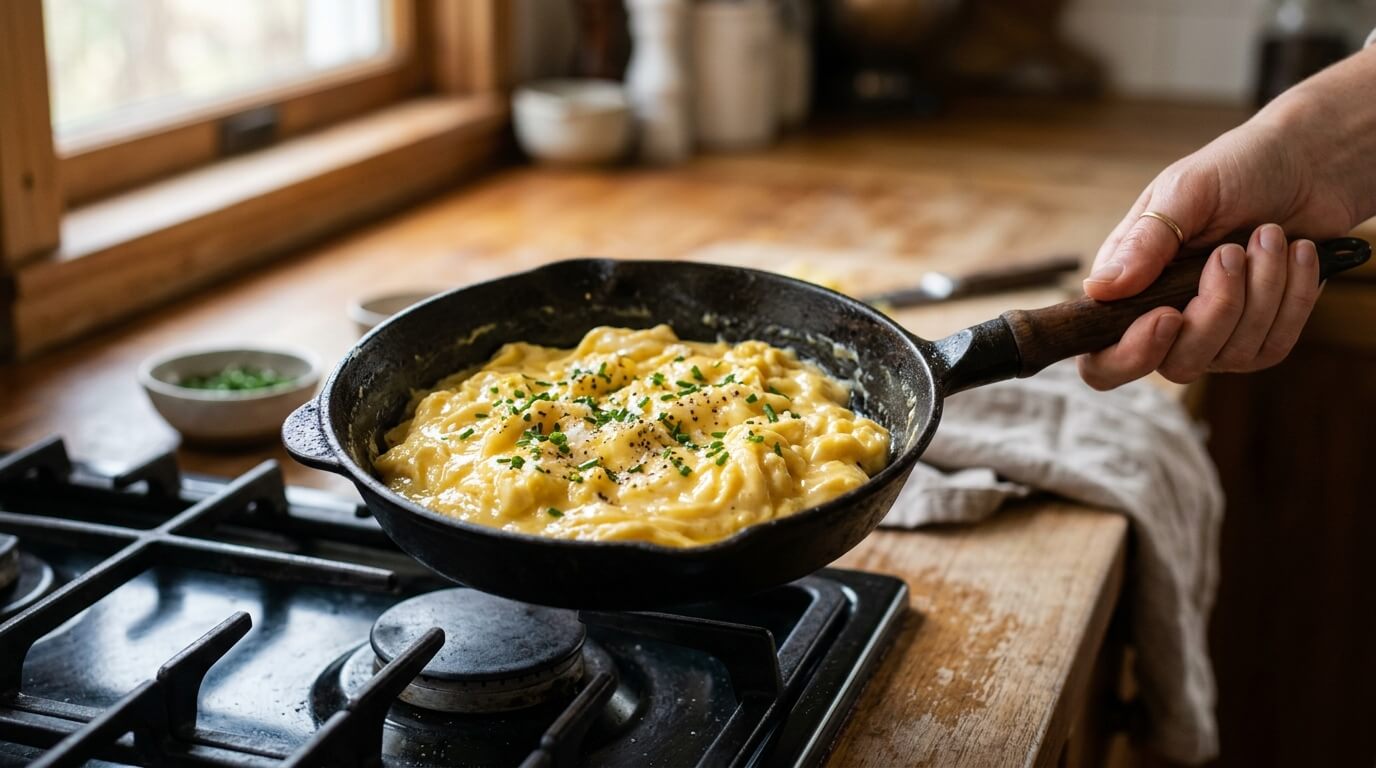
This is the most critical step for soft scrambled eggs. Remove the pan from the burner when the eggs look about 90% cooked, they should still look slightly wet or glossy. The residual heat from the pan will finish the cooking process on the plate.
Step 5: The Seasoning Anchor
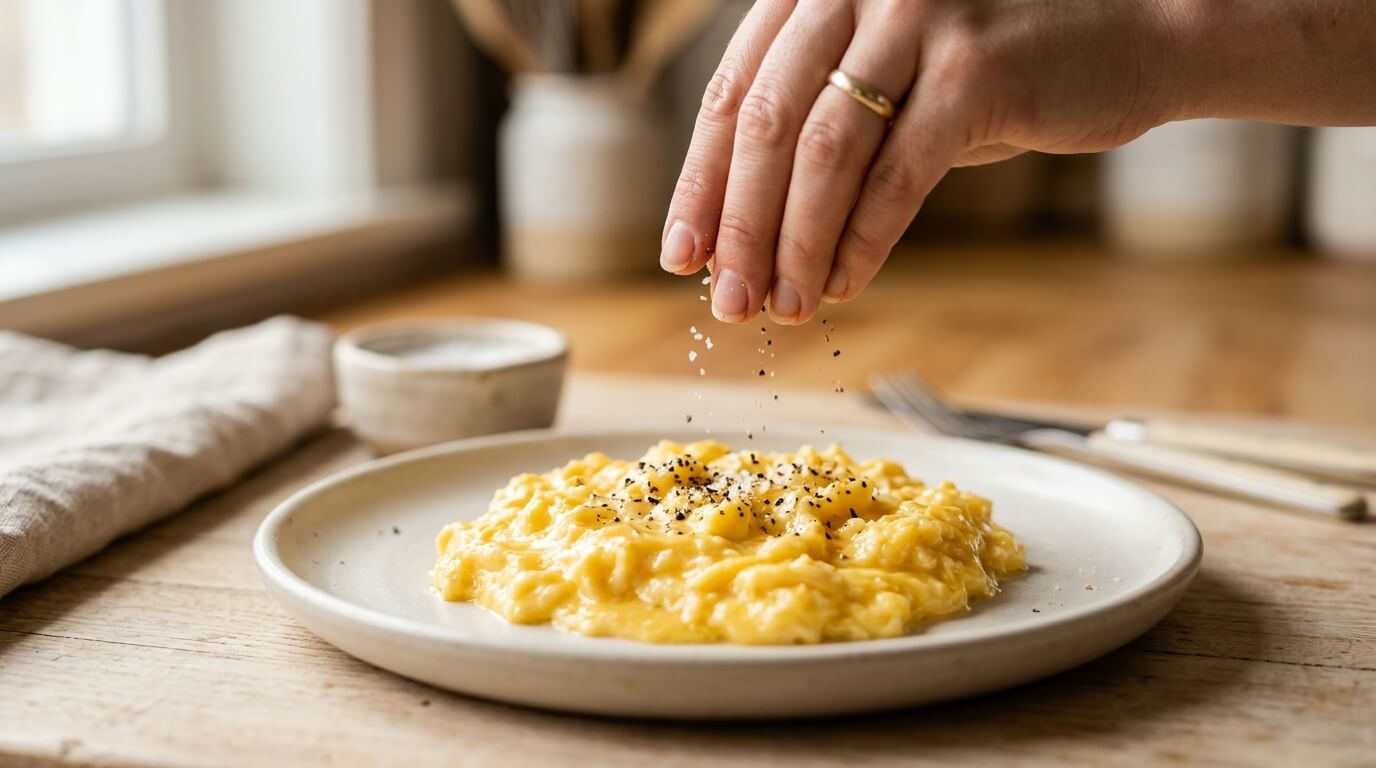
Add your salt and pepper only at the very end. Salt can draw moisture out of raw eggs, so seasoning right before serving ensures they stay plump and moist.
Common Mistakes And How to Fix Them.
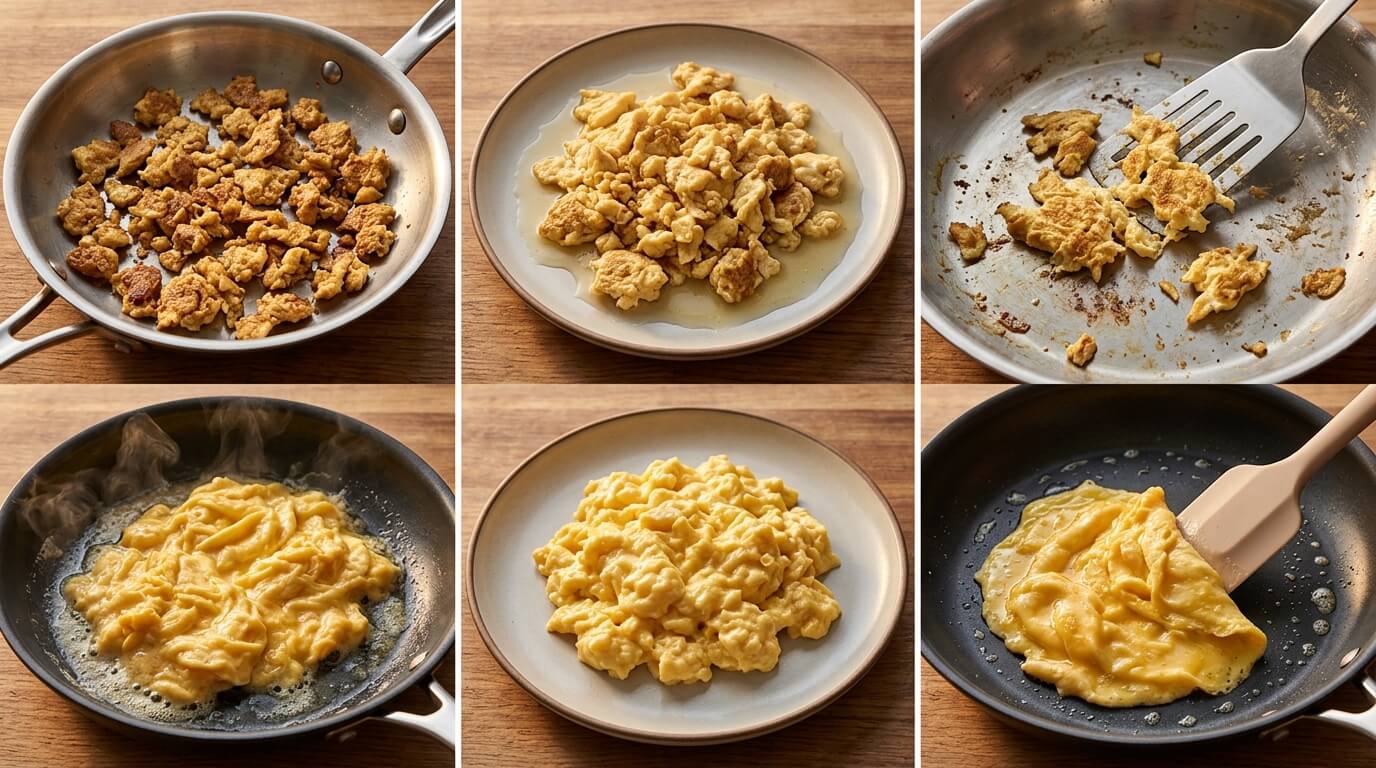
Why are my scrambled eggs rubbery?
Usually, this is caused by high heat.
Fix: Turn your stove down! Low heat creamy eggs.
The Watery Plate: This happens when eggs are salted too early or overcooked until they weep.
Fix: Add salt right before pouring into the pan and remove them while they still look moist.
Stuck to the Pan: This happens if the pan isn't non-stick or wasn't preheated.
Fix: Use a quality non-stick pan and ensure the butter is bubbling before adding eggs.
How to Serve & Present Easy Scrambled Eggs Recipe
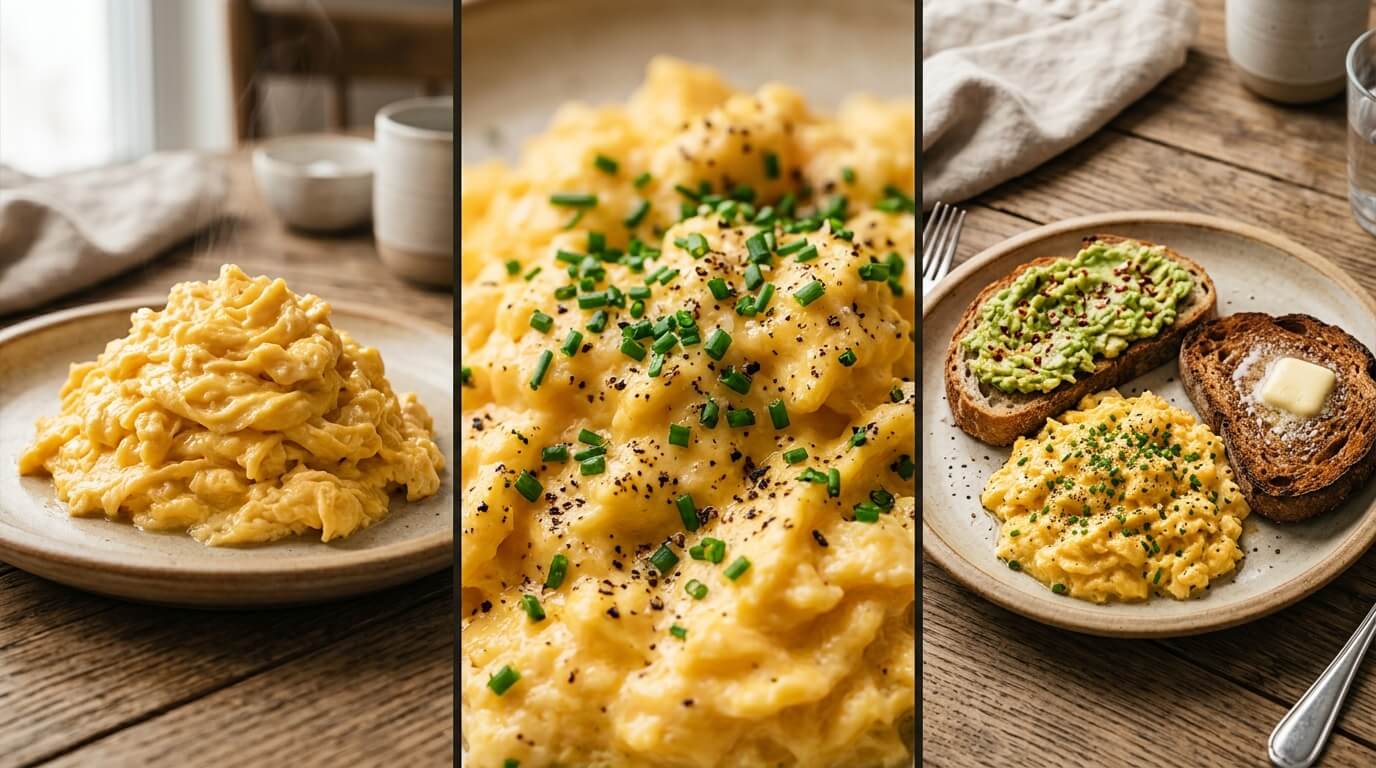
The Mountain Stack: Pile the eggs high in the center of a warm plate to maintain heat.
Contrast Garnish: Sprinkle bright green chives and a crack of black pepper over the top for a professional color contrast.
The Side Hustle: Serve alongside avocado toast or a piece of sourdough with a pat of melting butter to complete your Healthy Food Art presentation.
Best Add Ins for Easy Scrambled Eggs Recipe
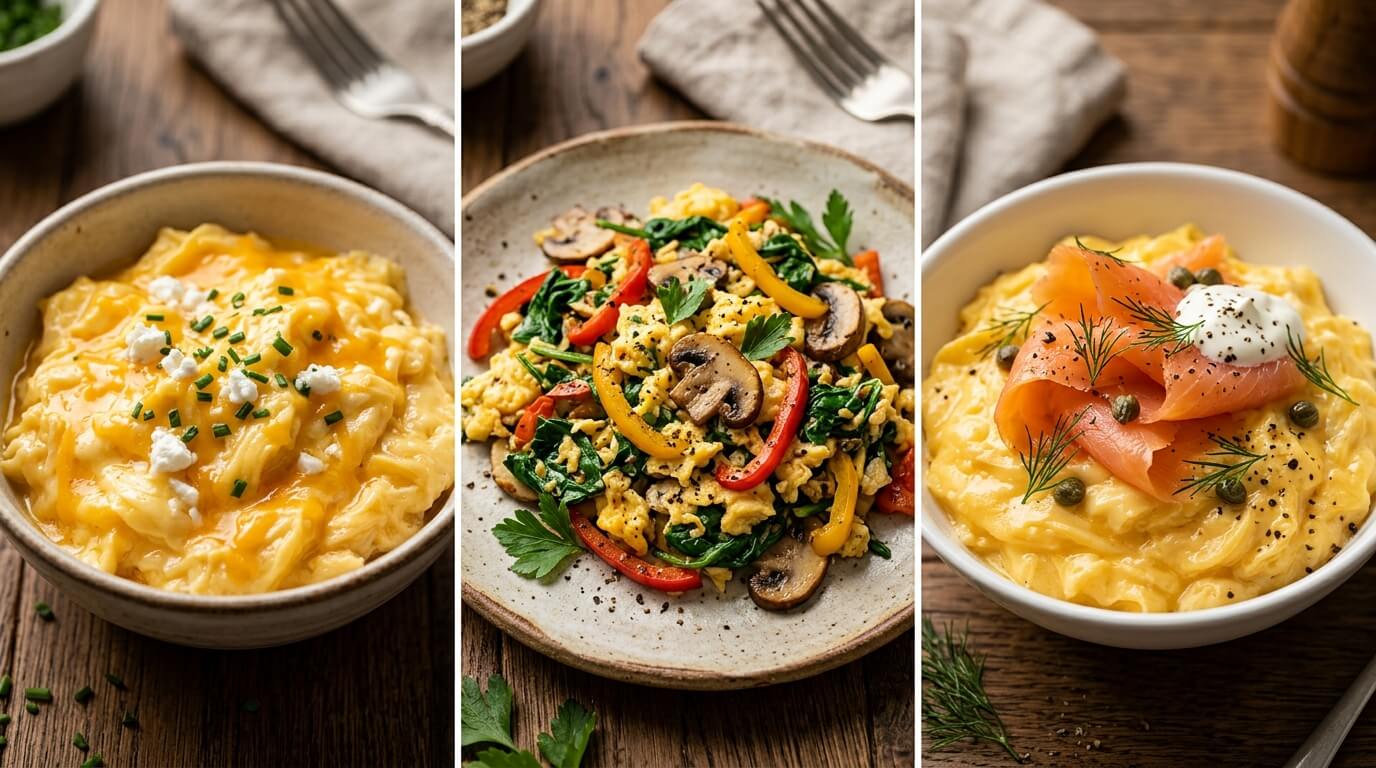
Cheesy Delight: Fold in shredded cheddar or goat cheese during the last 20 seconds of cooking.
Vegetable Crunch: Add sautéed spinach, mushrooms, or bell peppers for a fiber rich quick breakfast eggs boost.
Smoked Salmon: For a Luxe version, top your eggs with thin ribbons of smoked salmon.
Tips And Tricks
The Whisking Secret: Most beginners stop whisking too early. To get that restaurant style scrambled eggs texture, whisk until the eggs are completely pale and no strings of egg white remain. This incorporates tiny air bubbles that expand during cooking to create that famous fluffiness.
The Carry Over Rule: Never cook your eggs until they look dry in the pan. Eggs are mostly protein and water; they continue to cook for about 60 seconds after they hit the plate. Remove them when they still look glistening and slightly wet by the time you sit down to eat, they will be perfect.
Cold Butter Start: For extra creaminess, try dropping a tiny cube of cold butter into the eggs after they are in the pan. As the butter melts slowly, it creates an emulsion with the eggs, resulting in a velvet-like finish.
Healthy Swaps
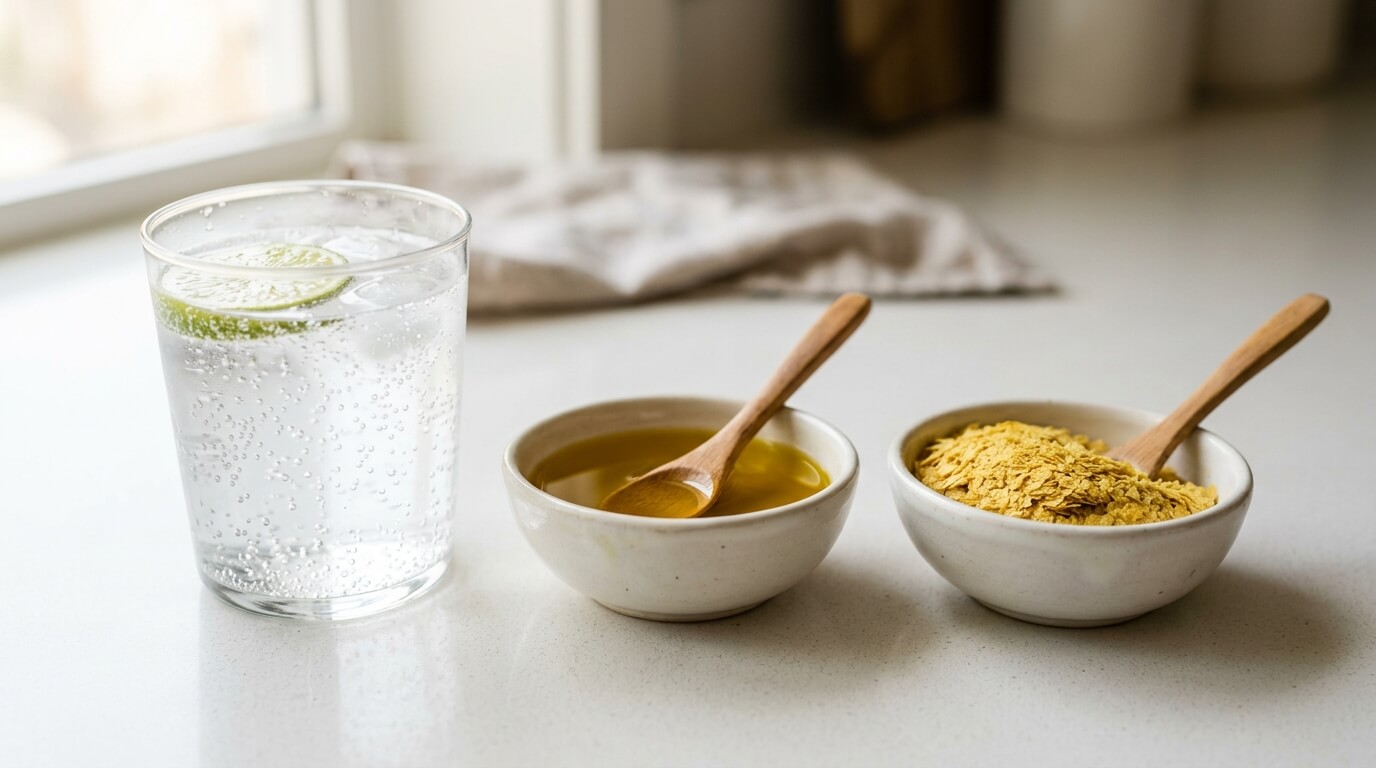
The Fluffiest No Milk Hack: If you want a no milk version but still crave volume, use sparkling water! The carbonation creates tiny steam pockets that make the eggs exceptionally airy.
Heart Healthy Fats: While butter is classic, Extra Virgin Olive Oil is a fantastic healthy swap. It adds a fruity, peppery note that pairs beautifully with the black pepper and chives seen in your photo.
Fiber & Protein Boost: Stir in a tablespoon of nutritional yeast. Not only does it add a cheesy flavor without the dairy, but it also provides (B)vitamins and extra protein, making this a powerhouse breakfast for busy people.
Variations (Optional)
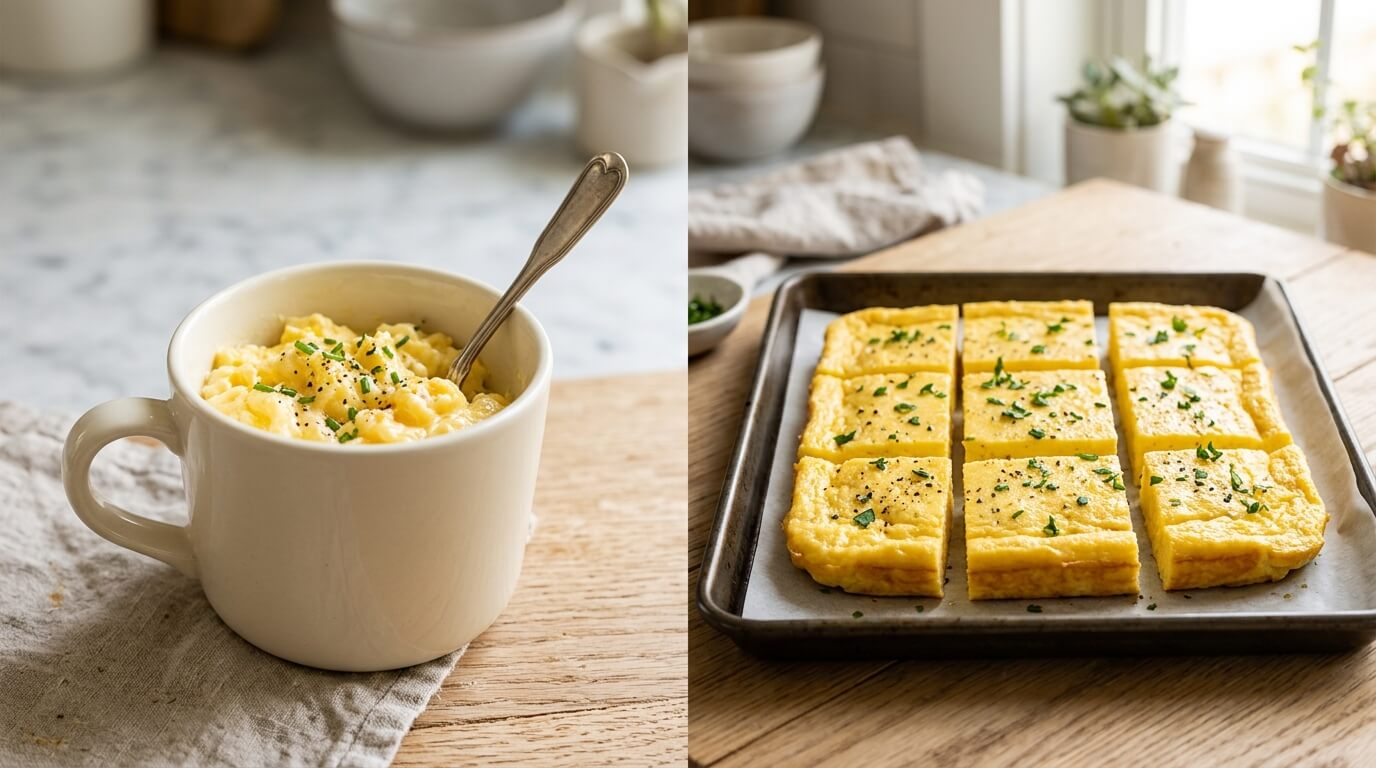
The Mug Scramble Microwave: If you have zero time, whisk 2 eggs, a splash of water, and a pinch of salt in a microwave-safe mug. Microwave for 30 seconds, stir to break up the curds, and microwave for another 20/30 seconds. It’s the ultimate 5 minute scrambled eggs hack for the office or school mornings.
Sheet Pan Scramble: If you are feeding a large family, you can actually bake your scrambled eggs on a greased sheet pan at 350°F for 10 minutes. Cut them into squares for easy Egg Sandwiches.
Storage, Make Ahead & Reheating
Storage: Scrambled eggs are best fresh, but can be stored in the fridge for up to 2 days.
Make Ahead: You can whisk your egg mixture without salt and keep it in a jar in the fridge for a fast pour and cook in the morning.
Reheating: To keep them soft, reheat in the microwave at 50% power in 15 second bursts with a damp paper towel on top.
Nutrition
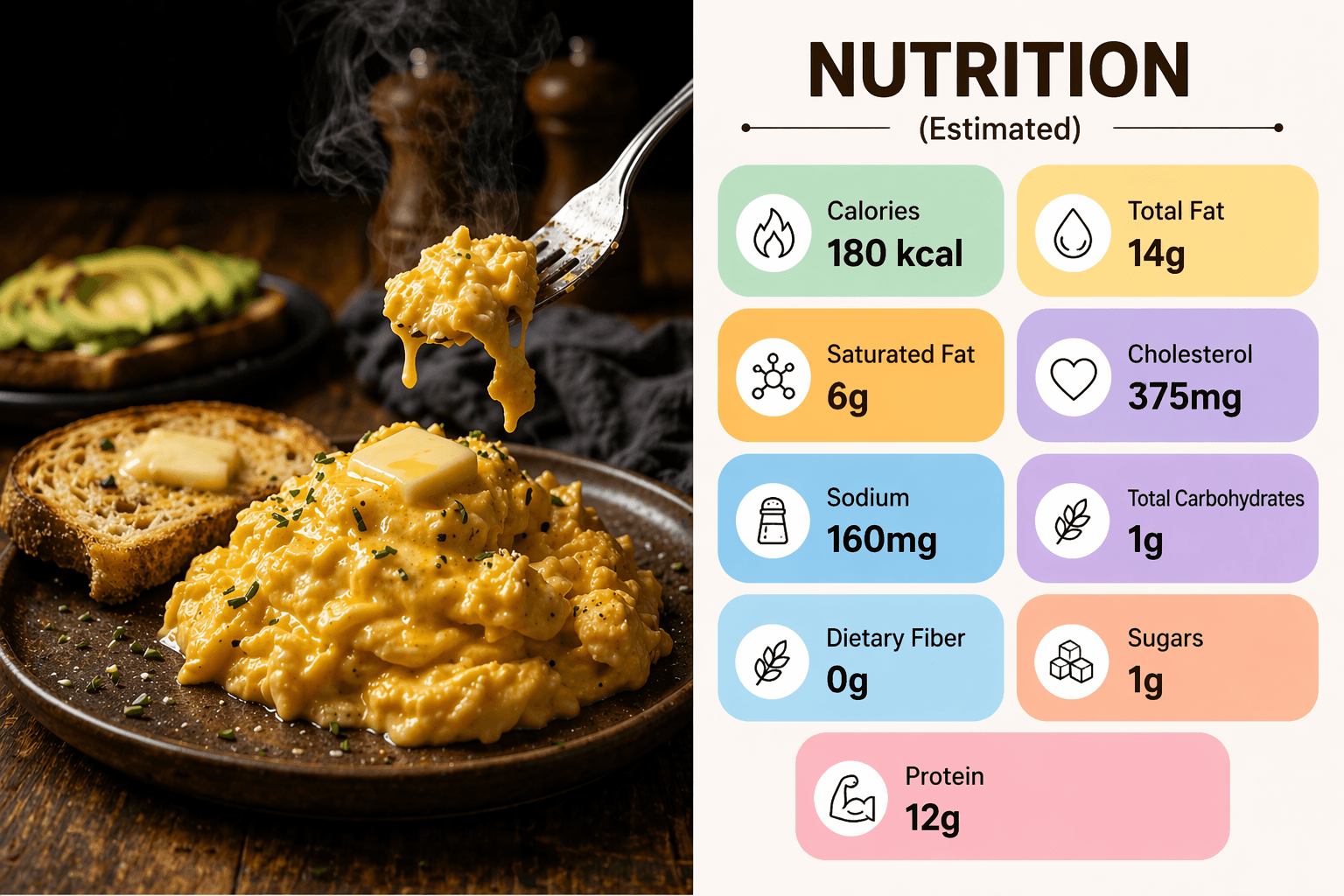
Note: The values below are based on a standard serving of 2 large eggs prepared with 1 teaspoon of butter and a splash of whole milk. Using Healthy Swaps like olive oil or egg whites will adjust these totals.