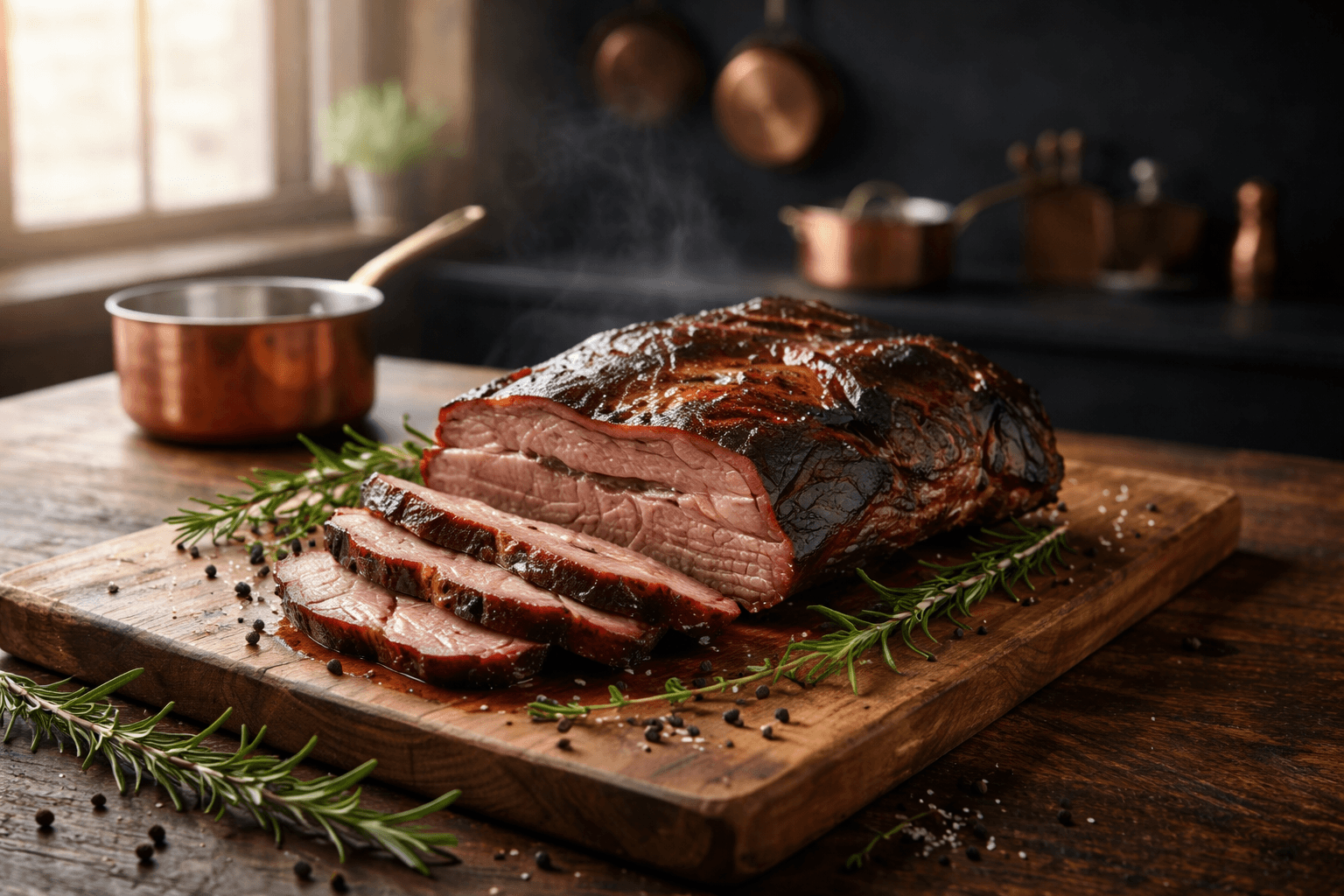
True BBQ is an art form that cannot be rushed. This Texas brisket recipe is designed for the purist who believes that high-quality beef and wood smoke should do the talking. We’ve utilized the "Central Texas" approach relying on a Texas brisket rub salt pepper only base to allow the natural flavor of the beef to shine. From navigating the Texas style brisket stall temperature to the critical resting phase, this tutorial provides the technical roadmap to a pitmaster’s masterpiece in your own backyard.

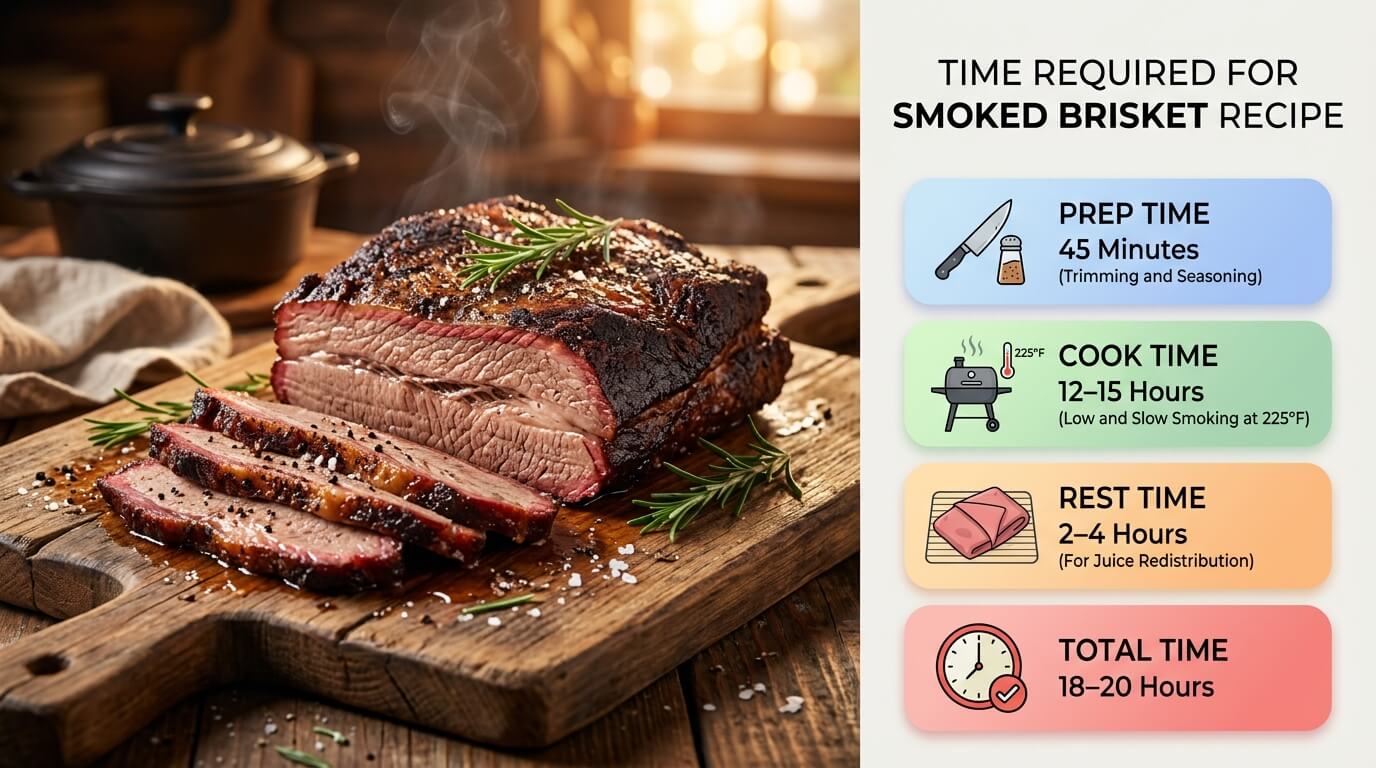
Time Required for Texas Style Smoked Brisket Recipe
Ingredients for Texas Style Smoked Brisket Recipe
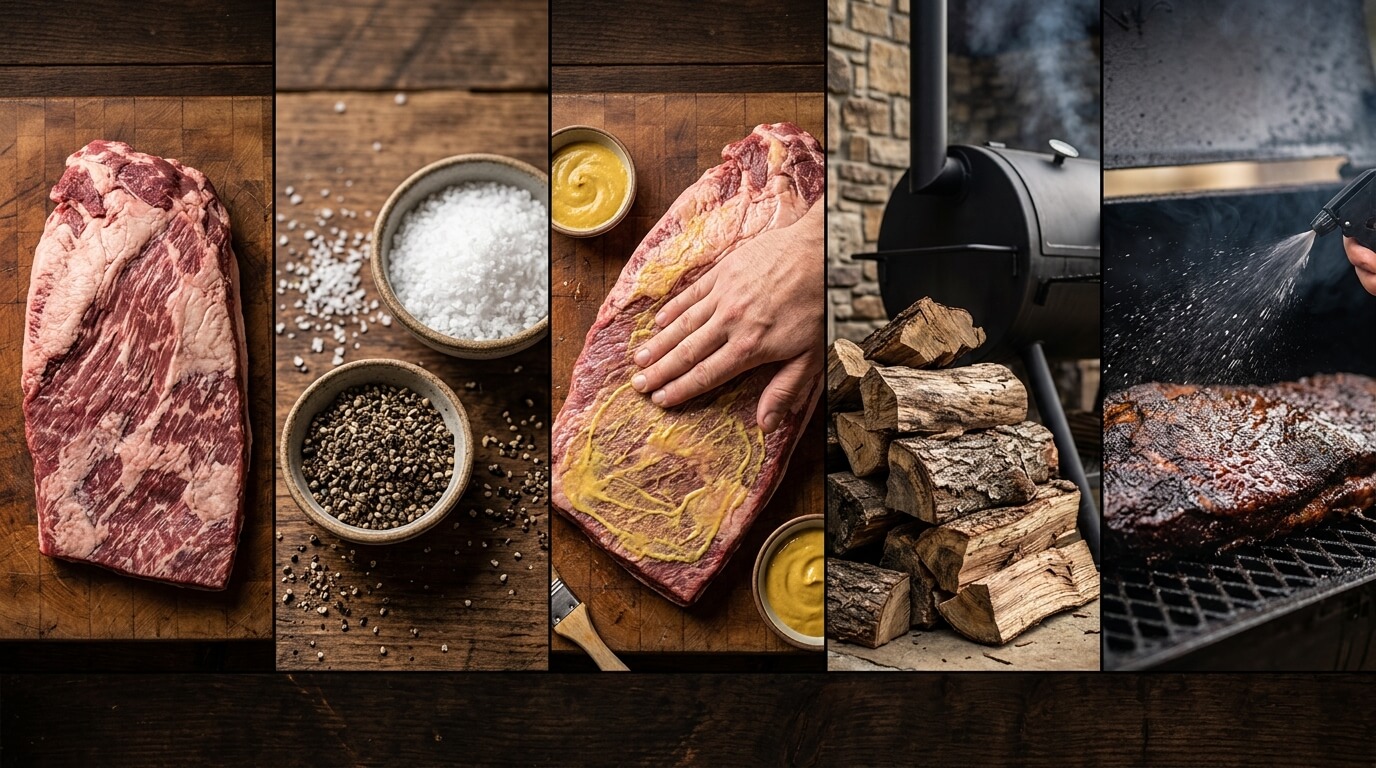
The Canvas: 12-14 lb Whole Packer Brisket
You must start with a "Whole Packer" brisket, which includes both the brisket point vs flat.
The Flat: The lean, rectangular muscle that provides those perfect, uniform slices.
The Point: The marbled, fatty muscle that delivers the richest flavor and the famous "burnt ends."
The Quality: Look for "USDA Prime" or "Choice" at a minimum. The internal fat (marbling) is the secret to a juicy authentic Texas brisket; without it, the meat will dry out during the long 16-hour haul.
The "Dalmatian" Rub: Kosher Salt & Coarse Black Pepper
In Texas, we don't hide the beef behind heavy sugars or spices. We use a Texas brisket rub of salt and pepper only (1/2 cup of each). Use Kosher salt. Its large flakes dissolve slowly and season the meat deeply without making it overly "salty."
The Pepper: This is critical. You need 16-mesh coarse ground black pepper. Standard table pepper is too fine and will make the bark bitter. Coarse pepper creates the "nooks and crannies" needed to catch the smoke and build that perfect Texas brisket bark recipe.
The Binder (Optional): Yellow Mustard
Many pitmasters use a thin coating of plain yellow mustard before applying the rub.It acts as a "glue" for the heavy salt and pepper.Don't worry,The vinegar and mustard flavor completely evaporates during the 12 lb Texas brisket smoking time, leaving behind only a perfectly seasoned crust. If you prefer, you can also use a light coating of olive oil or even water.
The Fuel: Post Oak Wood
The wood is an ingredient just as much as the salt. For an authentic Texas brisket, you need Post Oak wood.It is the traditional wood of Central Texas BBQ. It provides a clean, mild, and "sweet" smoke that highlights the beef rather than overpowering it.
The "Mop" (Optional): Water & Apple Cider Vinegar
Keep a spray bottle handy with a 50/50 mix of water and apple cider vinegar. This is used to "spritz" the edges of the brisket flat if they start to look dry during the cooking. It adds a tiny hint of acidity that cuts through the rich fat.
Equipment Needed for Texas Style Smoked Brisket Recipe
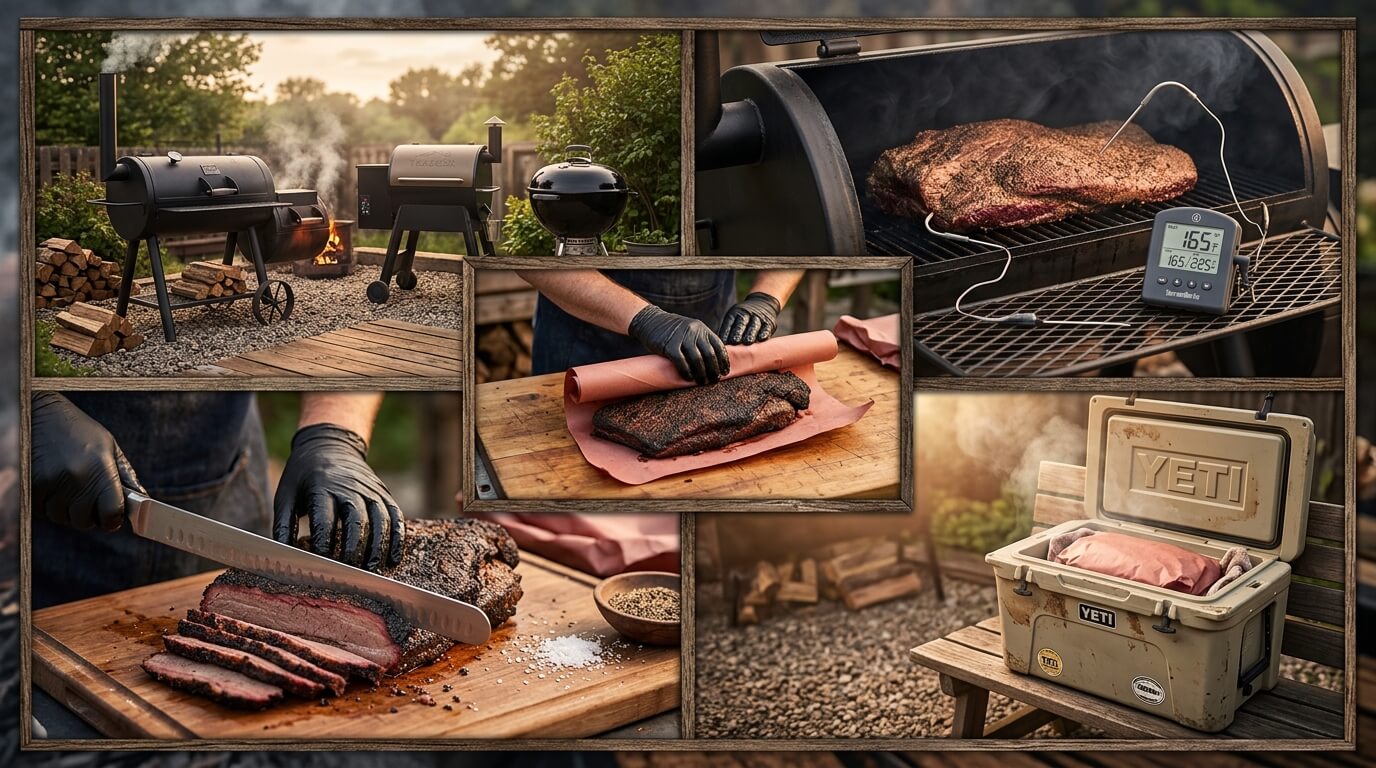
Offset Smoker or Pellet Grill: Capable of maintaining a steady 225°F/250°F.
Instant Read Meat Thermometer: To track the smoke 165 to 203 Texas brisket temp range.
Pink Butcher Paper: For the butcher paper wrap Texas brisket method (allows steam to escape while retaining fat).
Sharp Trimming Knife: A curved boning knife is best for removing excess hard fat.
Step by Step Instructions
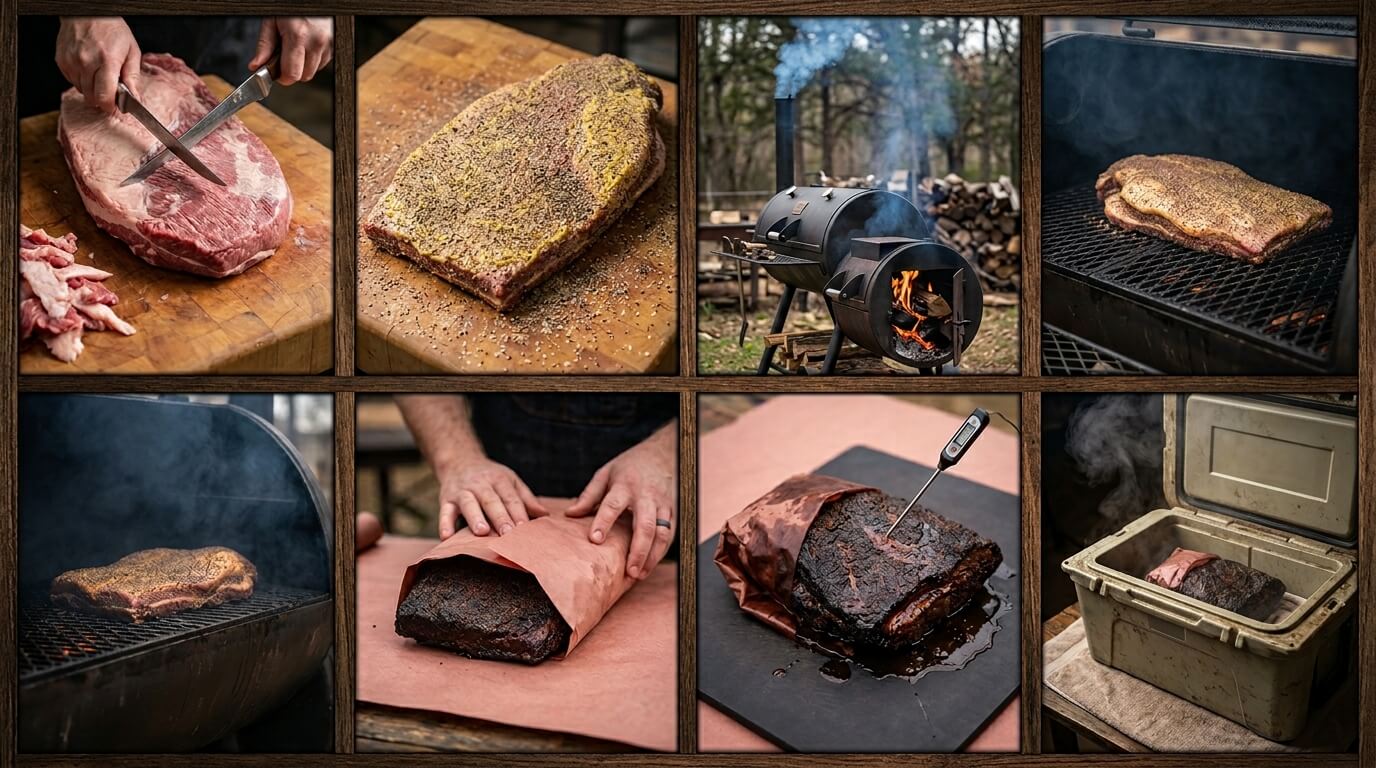
Step 1: The Pitmaster’s Trim
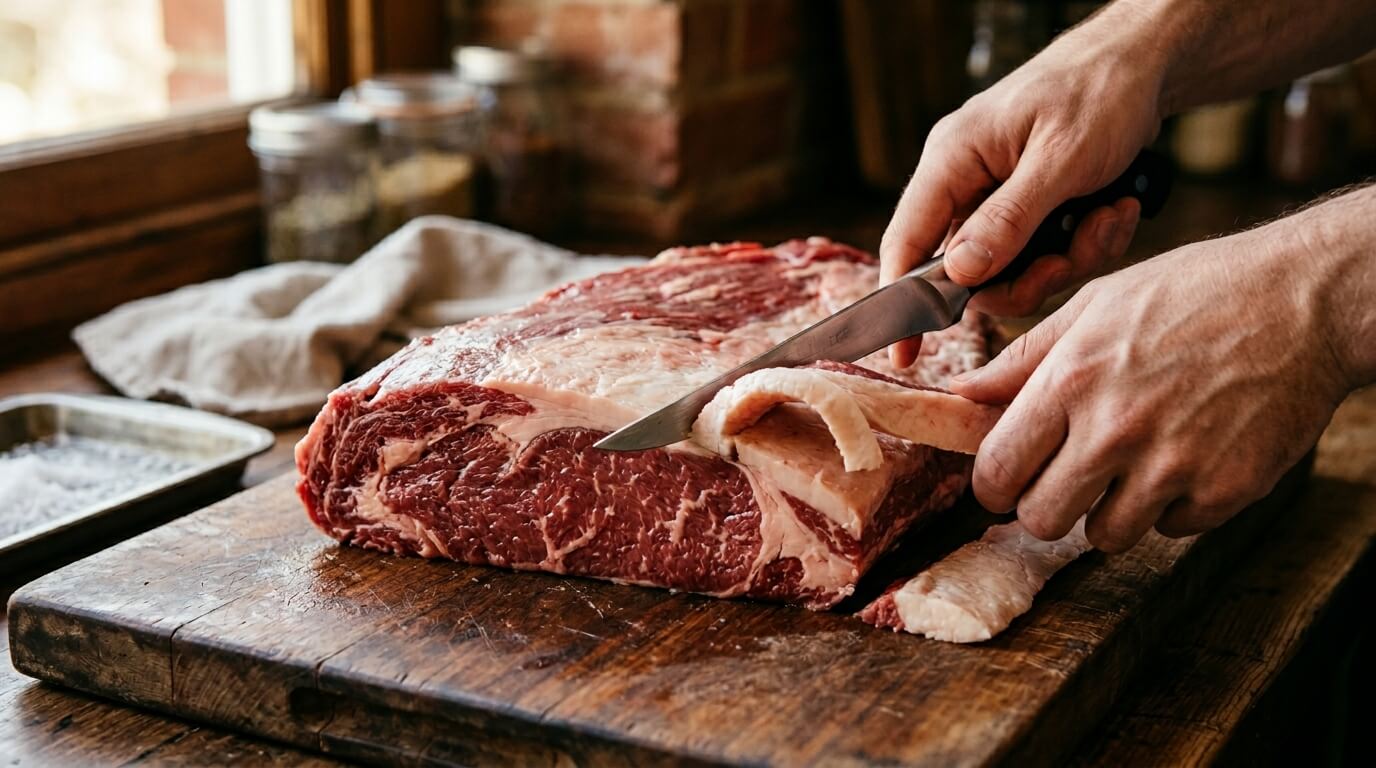
Trim the fat cap to a uniform 1/4 inch thickness. Remove the "hard" deckle fat that won't render. An aerodynamic shape ensures even airflow and a consistent perfect Texas brisket bark recipe.
Step 2: The Dalmatian Rub
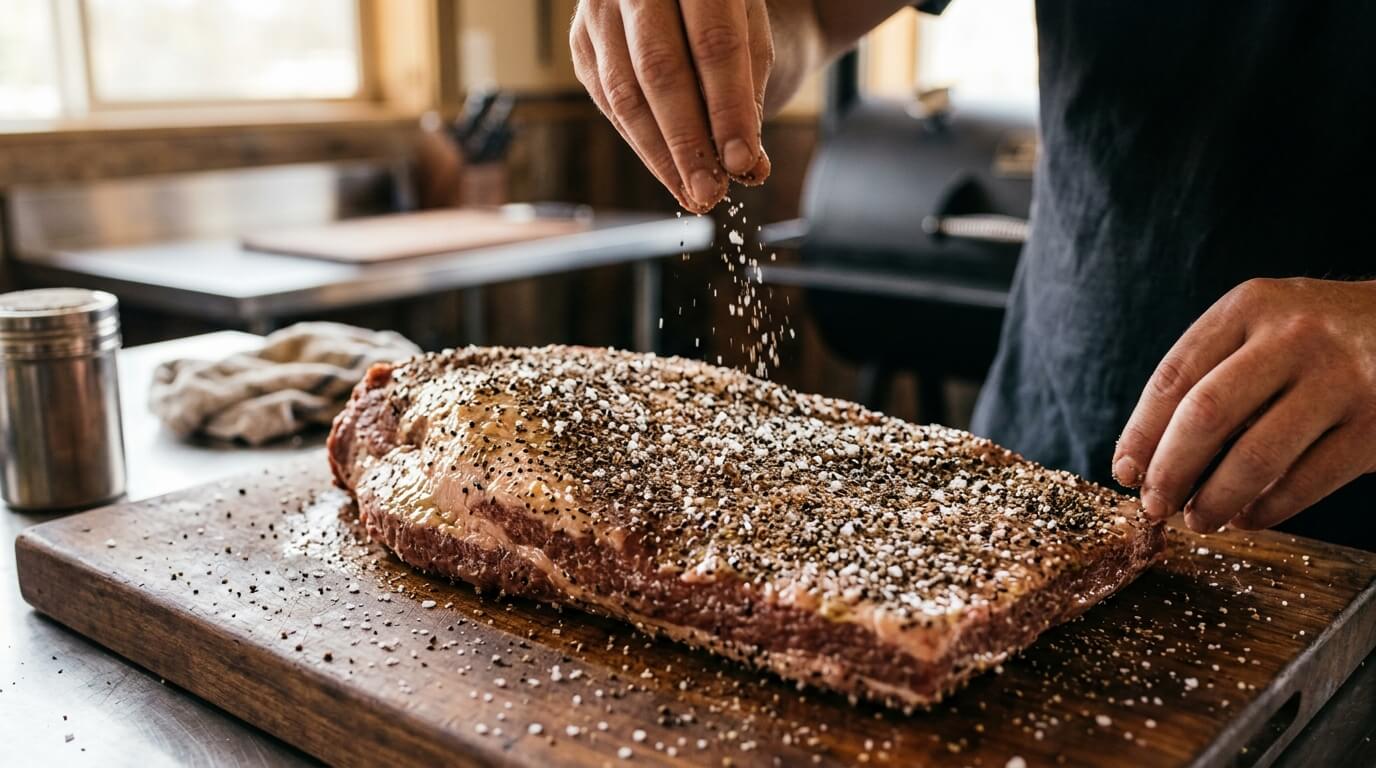
Apply your binder, then coat the meat heavily with the kosher salt coarse pepper brisket rub. Don't be shy; this layer creates the crust. Let the brisket sit at room temperature for 30 minutes while your smoker stabilizes.
Step 3: The Low and Slow Smoke
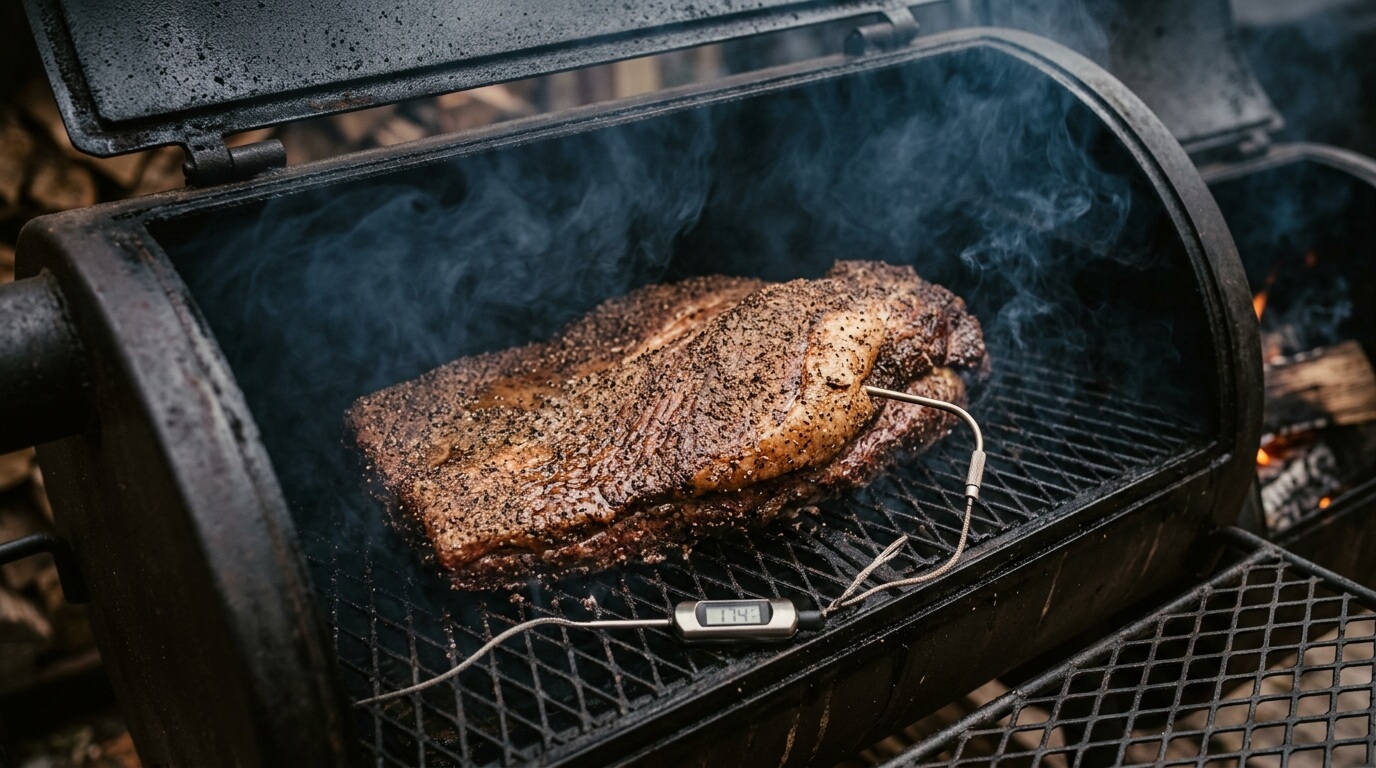
Place the meat in the smoker at 225°F. For the Texas brisket fat side up or down debate, most pitmasters prefer fat-side up in an offset smoker to allow the rendering fat to "baste" the meat. Smoke until the internal temperature reaches approximately 165°F.
Step 4: Navigating the Stall & The Wrap
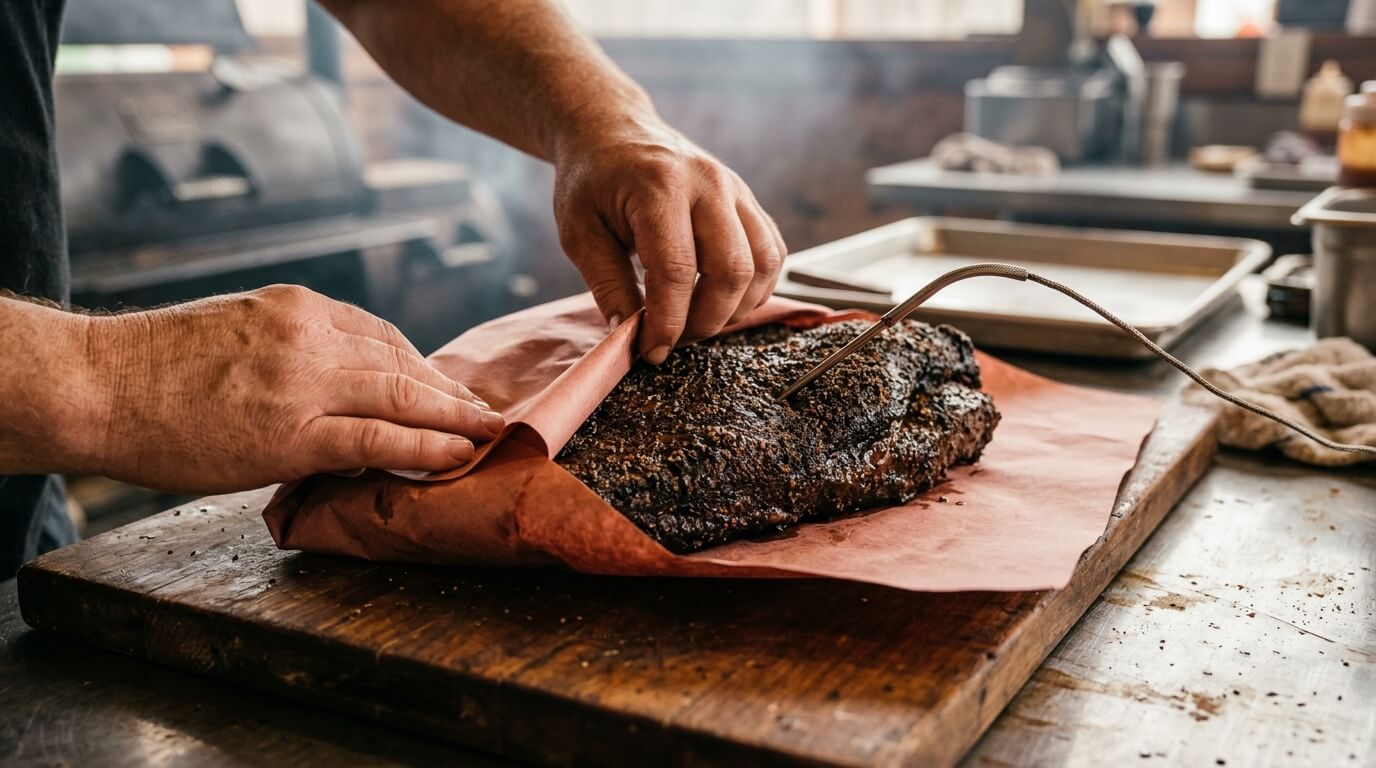
When the temp plateaus (the "stall"), wrap the meat in pink butcher paper. This is the Texas crutch that speeds up the cook while preserving the bark texture. Continue smoking until the internal temperature hits 203°F and the probe slides in like butter.
Step 5: The Essential Rest
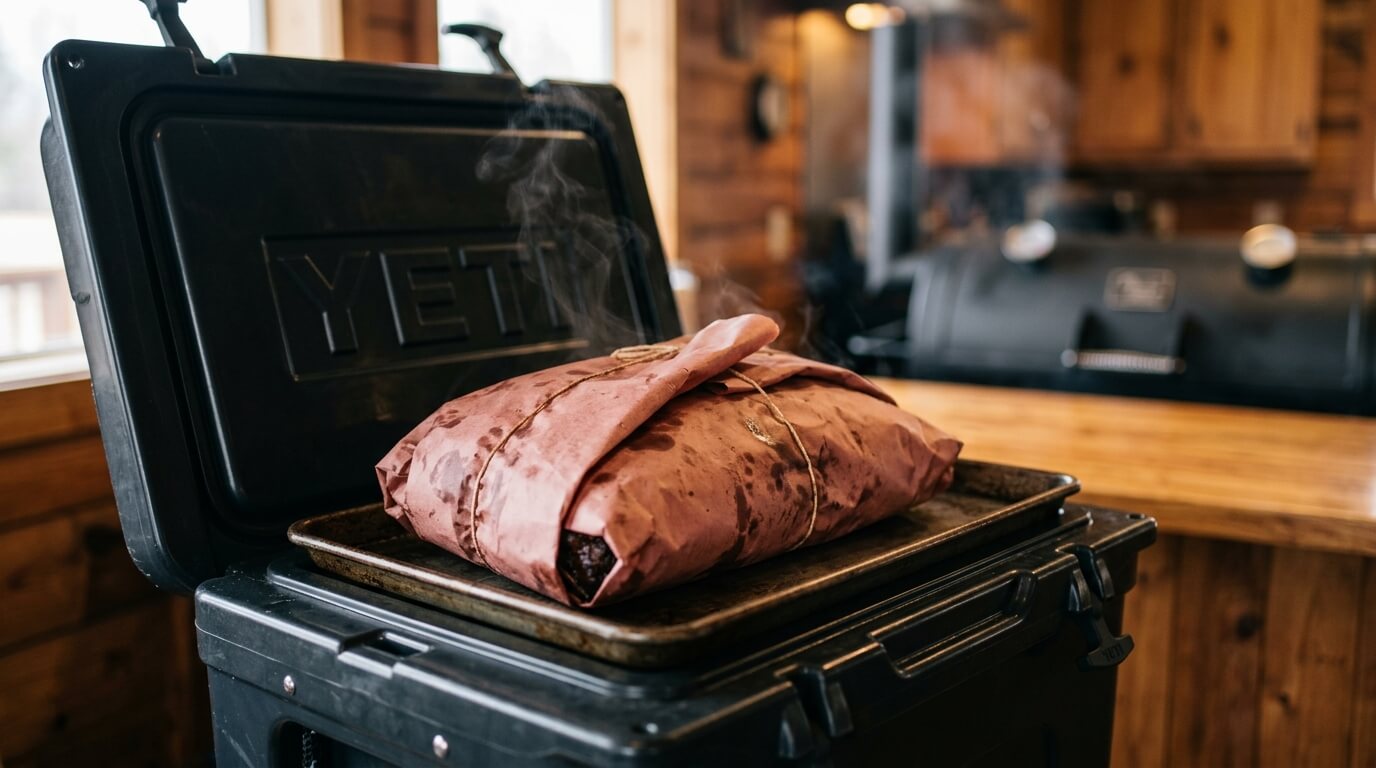
Remove from the smoker but keep it wrapped. Place it in an empty cooler or a room temperature oven for a Texas brisket rest time before slicing for at least 2 hours. This allows the fibers to relax and reabsorb the juices.
Common Mistakes And How to Fix Them
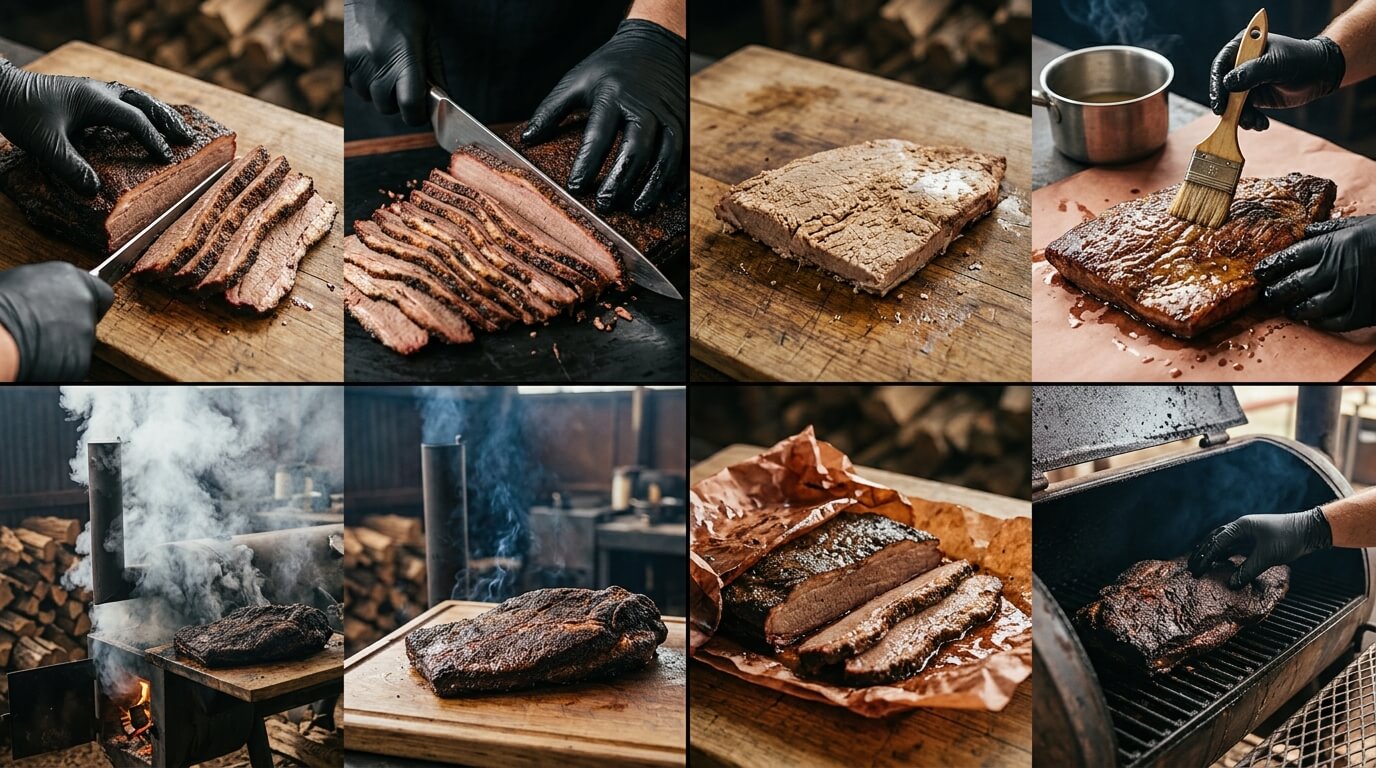
Tough, Dry Meat: You likely skipped the rest or pulled it too early.
Fix: Always wait for the "probe tender" feel, not just the temperature number.
Mushy Bark: Using foil instead of butcher paper.
Fix: Use pink butcher paper to allow the meat to "breathe."
Bitter Smoke Flavor: This comes from "dirty" white smoke.
Fix: Ensure you have a clean, blue flame and steady airflow.
How to Serve & Present Texas Style Smoked Brisket
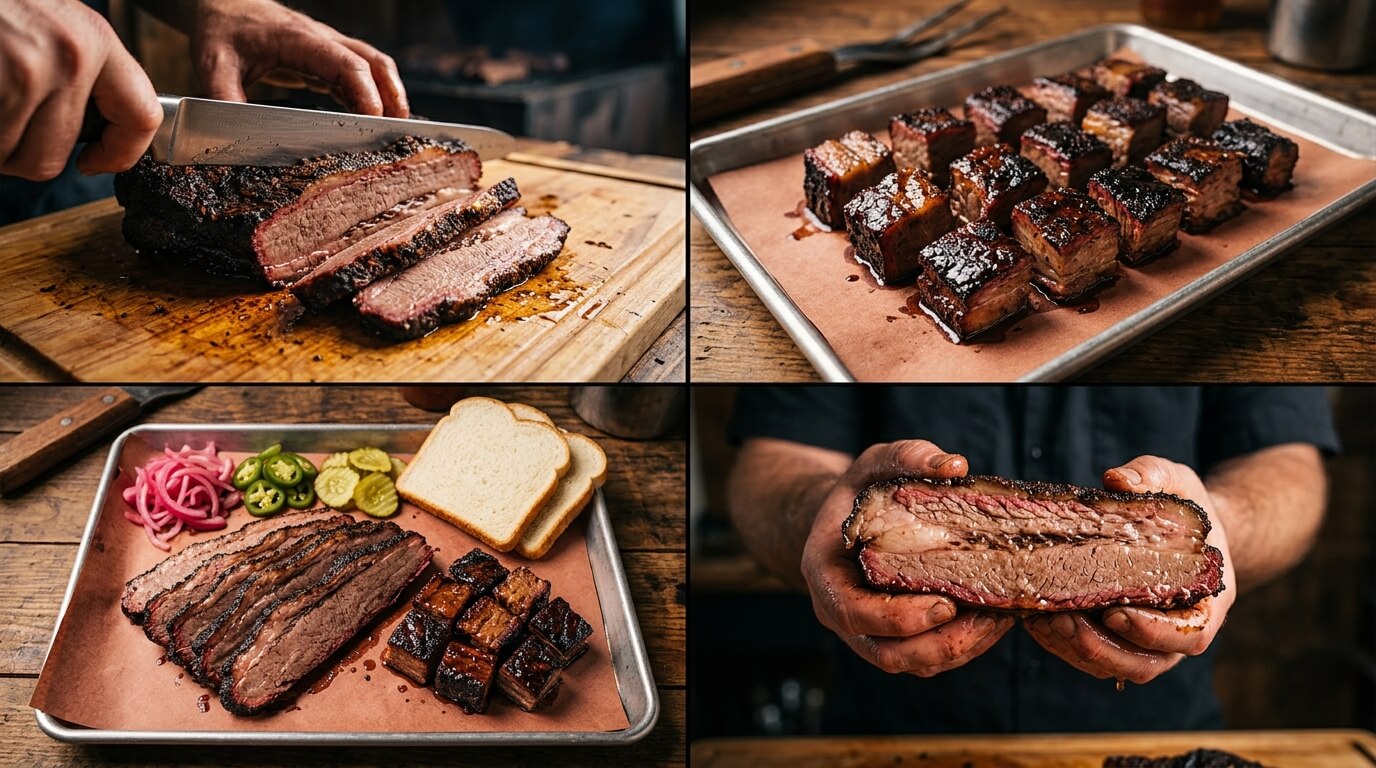
The Slice: Always slice against the grain. Slice the flat into pencil thick strips and the point into slightly thicker pieces or "burnt ends."
The "Food Design" Lean: Drape a slice over your finger; it should hang perfectly without breaking (the "Bend Test").
The Platter: Serve on a butcher-paper-lined tray with white bread, pickles, and raw onions for the authentic Texas brisket experience.
Best Add-Ins for Texas Style Smoked Brisket
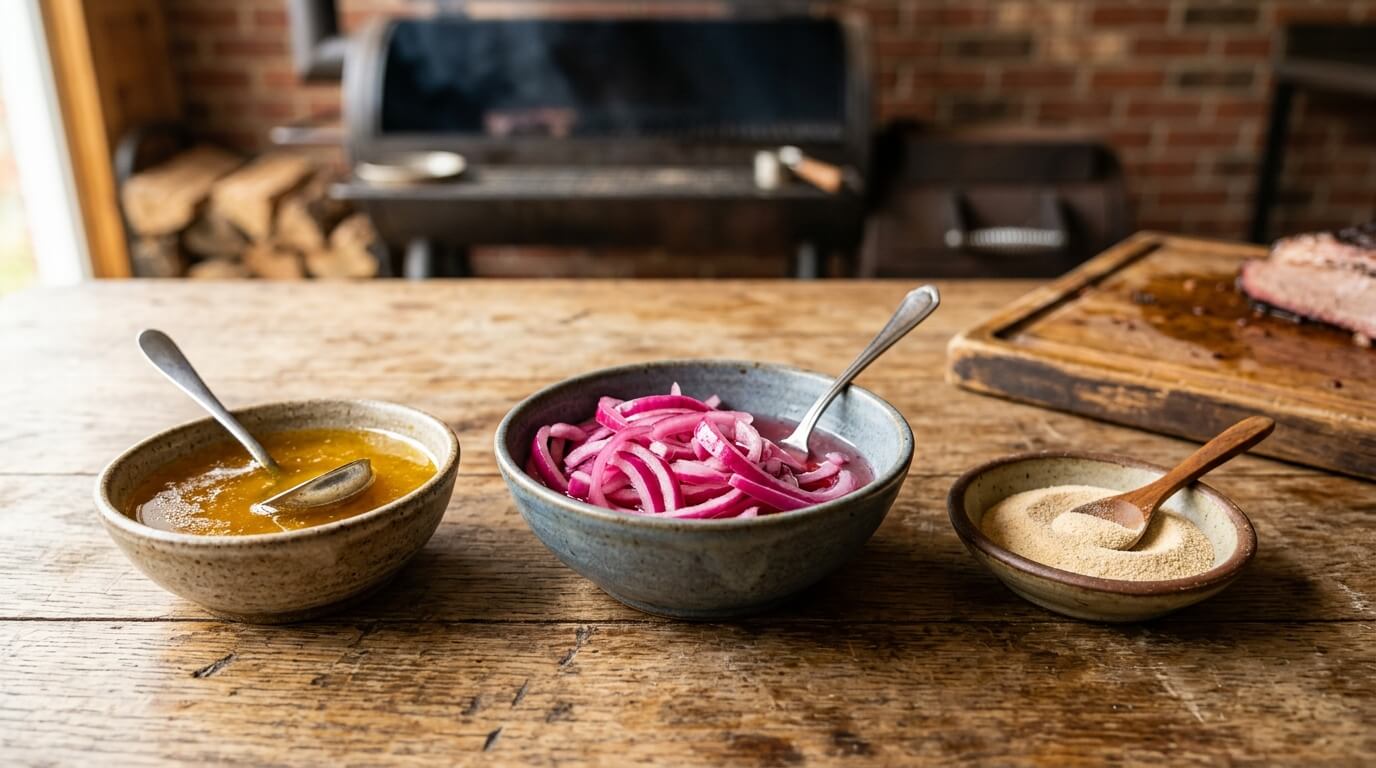
Beef Tallow: Spread a little rendered beef tallow on the butcher paper before wrapping for extra silkiness.
Pickled Red Onions: The acidity cuts through the heavy fat of the brisket.
Garlic Powder: While purists use only S&P, a dash of garlic powder in the rub adds a subtle savory depth.
Tips And Tricks
The Water Pan: Place a small pan of water in the smoker to keep the environment humid, which helps the smoke stick to the meat.
Clean Smoke: Look for "Thin Blue Smoke." If the smoke is thick and white, your fire is starving for oxygen.
The Overnight Cook: Start your 12 lb Texas brisket smoking time the night before to ensure it's ready for a late afternoon feast.
Healthy Swaps
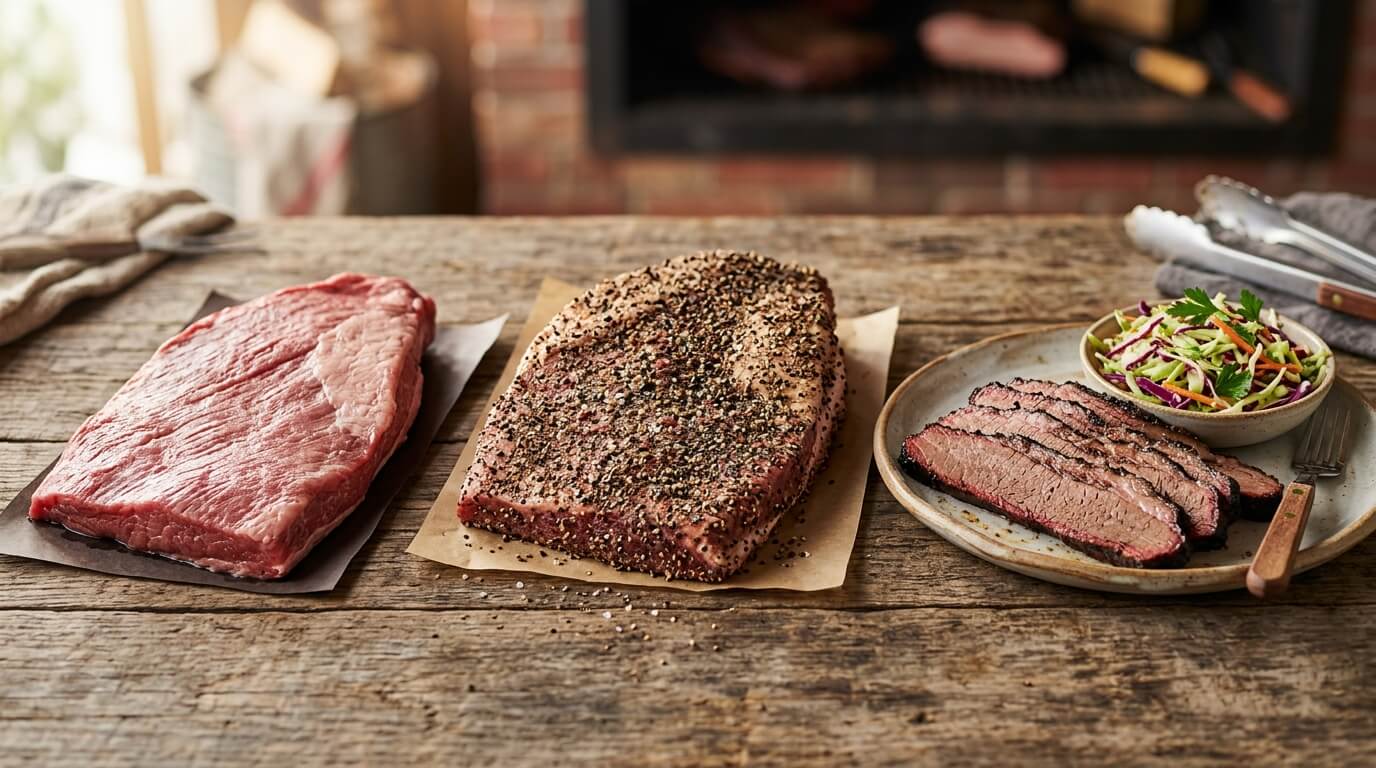
Trim Aggressively: Remove more of the external fat cap before cooking to reduce total calories.
Low Sodium: Reduce the salt in the rub and increase the coarse pepper for a "Blackened" flavor without the sodium hit.
Side Pairings: Serve with a vinegar based slaw instead of creamy potato salad.
Variations (Optional)
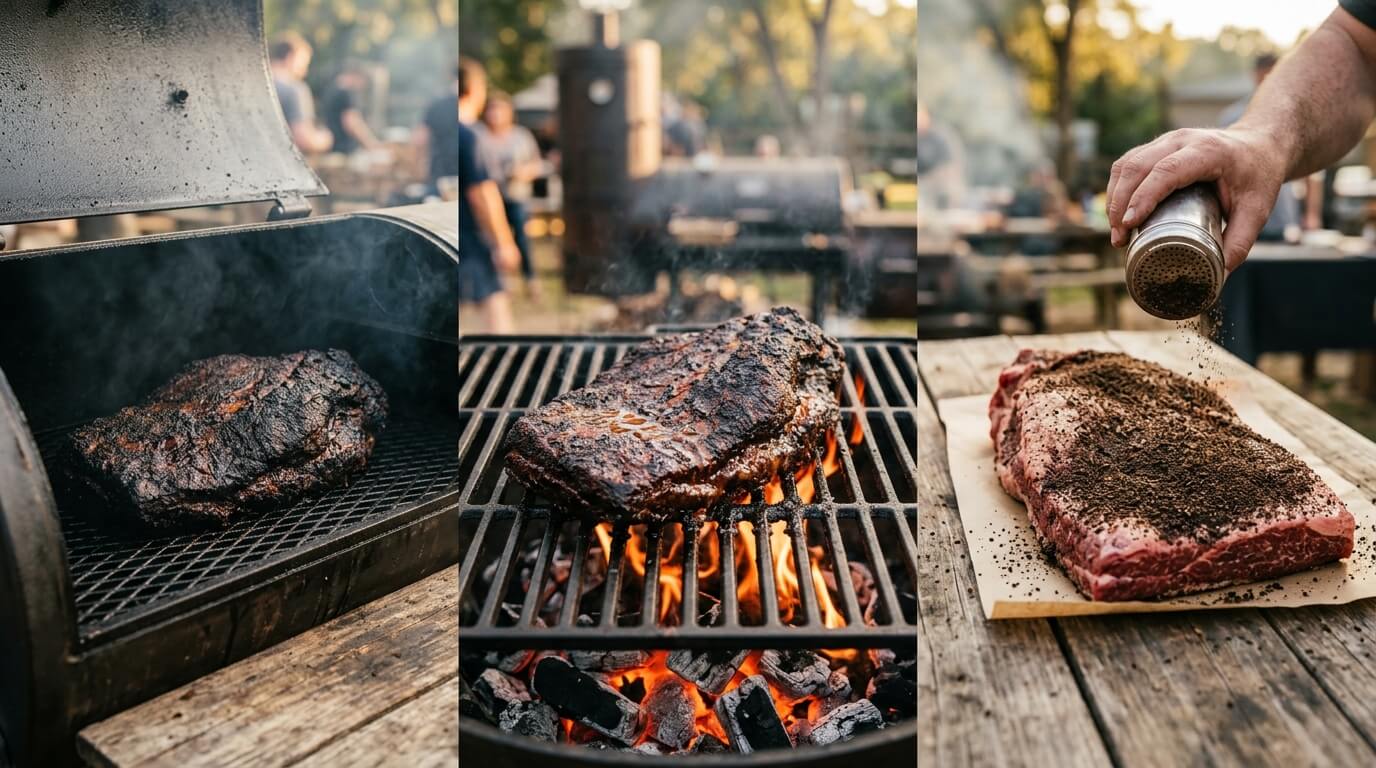
Authentic Texas Brisket No Wrap Method: For the ultimate crunchy bark, leave the meat unwrapped the entire time (requires more monitoring to prevent drying).
Hot and Fast: Smoke at 300°F to cut the time down to 6/8 hours (best for experienced pitmasters).
Coffee Rub: Add finely ground espresso to the rub for an earthy, dark crust.
Storage, Make-Ahead & Reheating
Storage: Wrap tightly in foil and refrigerate for up to 4 days.
Reheating: The best way to maintain "Food Art" quality is to reheat slices in a vacuum-sealed bag in warm water, or in a covered dish with a splash of beef broth at 250°F.
Nutrition
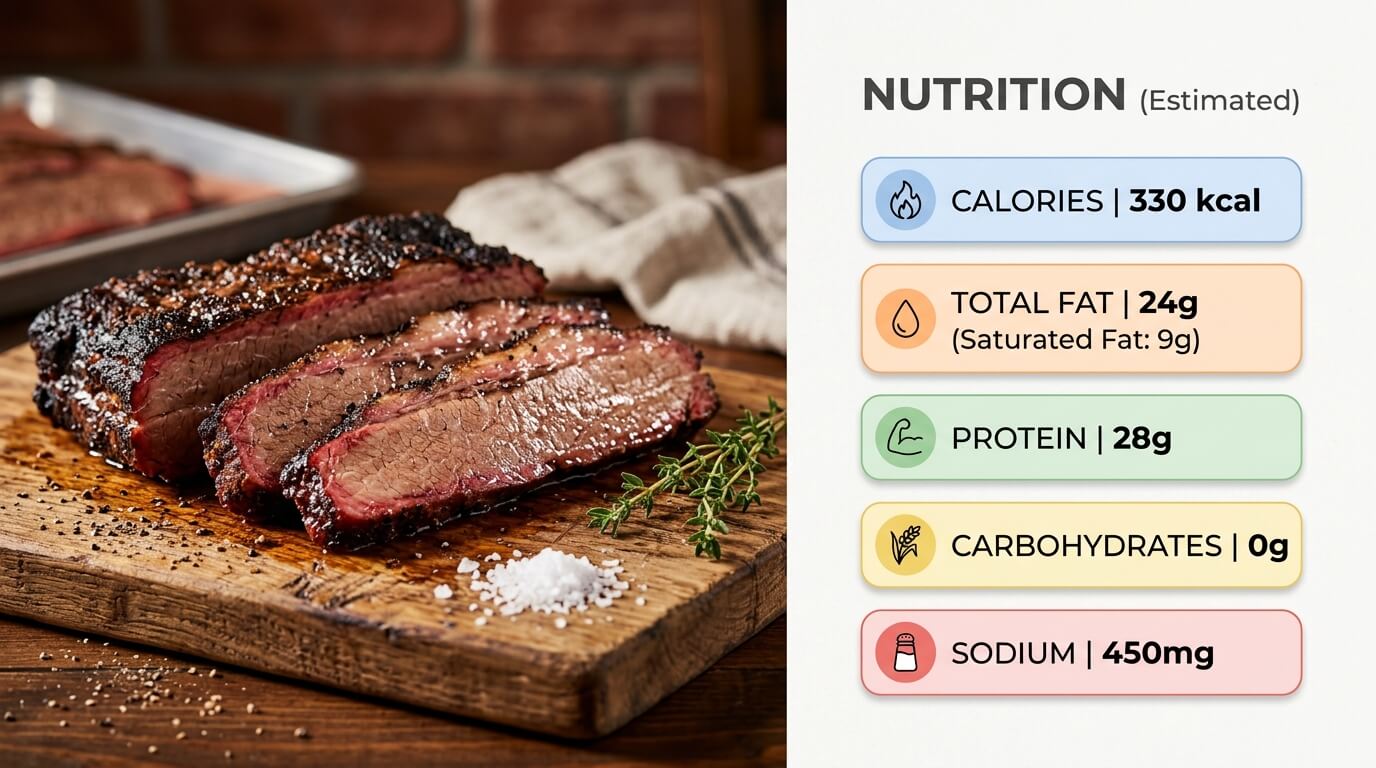
Note: Nutritional information is an automatic calculation and can vary based on exact products used. For precise values, calculate with your specific ingredients.